Summary
TRANSLATED FROM THE GERMAN ZUSAMMENFASSUNG, WHICH APPEARS UNCHANGED AT THE END OF THIS PAGE
After three industrial revolutions have already substantially transformed value chains, the focus of the fourth industrial revolution currently lies on the intelligent networking of people, objects and systems, accompanied by a high degree of automation. This thesis examines the effects of current Industry 4.0 trends with regard to the logistics and supply chain sector, a context in which the term Logistics 4.0 is also used. It becomes clear that the supply chain can benefit from Industry 4.0 to a great extent. High cost pressure, a strong trend towards individualisation and an intensifying shortage of skilled workers in particular are placing the sector under increasing pressure. In addition to general developments, three technological trends are examined in detail in this thesis: robotics and autonomous vehicles, crowdsourcing, and blockchain. In times of increasing digitalisation and rapidly rising demand driven by growing e-commerce, robots offer numerous opportunities to comprehensively automate manual processes, for example in warehouses. In addition, wage costs are rising, while the costs of deploying robots are falling continuously. Robots can moreover be deployed independently of time and are flexible in their number. Similar advantages arise from the use of autonomous vehicles, which, however, in contrast to robots, generally move in public space — autonomous trucks, for example. Furthermore, as a result of increasing digitalisation and the availability of mobile devices, crowdsourcing has gained importance as a second key trend. Numerous crowd logistics providers allow customers to book logistics services flexibly, which are then performed by any person from the crowd. Here, the business model of traditional logistics service providers is clearly called into question. In addition, crowdsourcing can deliver significant cost savings, particularly through more efficient use of resources. Blockchain technology represents a third relevant trend. In times of increasing globalisation of the value chain, it provides a reliable, immutable data source for the numerous participants in the supply chain, and can thus contribute to building trust where it was previously lacking. Whether robotics, crowdsourcing, or blockchain — these three trends already impressively illustrate the high dynamism of Logistics 4.0, which will significantly change the supply chain in the near future.
1 Introduction
In the last decade, the rise of Industry 4.0, the Fourth Industrial Revolution, has rapidly transformed a number of industries in major economies all over the world. Increasing globalization has shifted industries towards a more connected and more competitive environment. Technological developments like the Internet of Things or robotics have emerged and support companies in competing in such an environment. Especially for highly industrialized countries like Germany or the US, Industry 4.0 will have major impacts, including new chances but also challenges. As the production sites become more digitized, consequently the supply chain and logistics (SC&L) sector is impacted as well.
On the other side, trends on the customer side force companies to innovate. Customers demand a greater level of transparency, fast deliveries in times of rising E-Commerce and a more sustainable behaviour from SC&L companies. Endogenous technological trends in the sector are closely linked to those exogenous trends on the customer side, as the supply chain sector has become increasingly customer-centric (Kersten et al., 2017). Exogenous and endogenous trends together create the highly dynamic environment, SC&L companies are operating in today. In this context, this thesis provides an overview on current technological trends in the SC&L sector and assesses challenges and opportunities related to those trends with a major focus to logistics companies, but also to relevant stakeholders along the supply chain. Additionally, it outlines current and potential future impacts of those developments for SC&L.
Chapter 2 introduces the Industry 4.0 topic including a look back to previous industrial revolutions, to provide the relevant context. It defines relevant terms and outlines important concepts related to Industry 4.0. In Chapter 3, significant trends and current challenges in the logistics sector are presented and, in order to put the technological trends into context, a short overview is also given on exogenous trends on the customer site. In Chapter 4, selected technological trends are described, analysed, and discussed in more detail, with a conclusion following in Chapter 5.
2 Theoretical Background on Industry 4.0
To further illustrate the objective of this thesis, it is critical to look at the origin of the phrase Logistics 4.0. Going back to the year 2011, the very similar term Industry 4.0 has first been used at the Hanover Fair of Industrial Technologies. As the German economy has been largely based on industrial production since decades, the German government launched a project aiming to secure the long-term competitiveness of the German industry by implementing cyber-physical solutions, so called Cyber-Physical Systems (CPS). Underlining the disruptive potential of this transformation, it was described as Fourth Industrial Revolution and Industry 4.0 accordingly (Kagermann et al., 2013a), which by today has become a globally accepted and implemented phrase.
2.1 Industrial Revolutions
The three previous industrial revolutions were characterized by their major disruptive potential and Industry 4.0 is no exception. Going back to the 17th century, the First Industrial Revolution started, lasting over the 18–19th century. It was triggered by the invention of the steam engine and transformed manual labour into machine labour over the following decades in more and more countries all over the world.
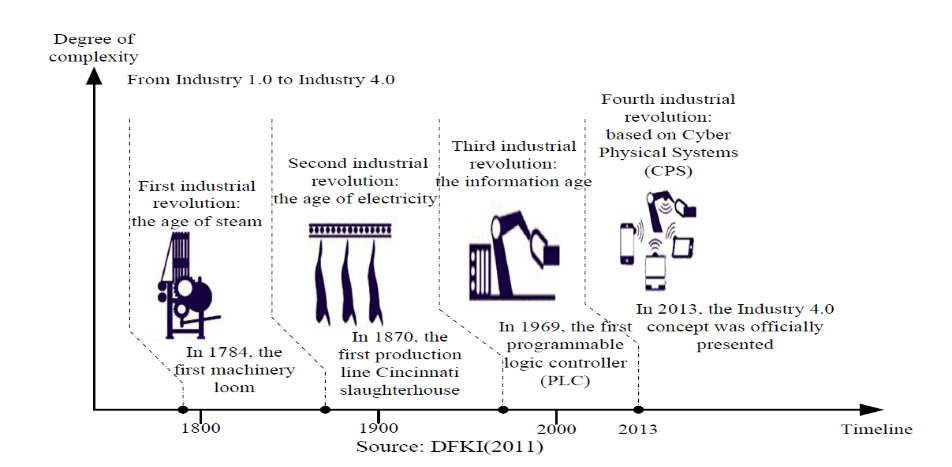
The Second Industrial Revolution was about to follow and mainly describes the replacement of steam with electricity and the rise of mass industrial production. Both, the First and the Second Industrial Revolution, are considered phases of the industrialization. The Third Industrial Revolution, also named the Digital Revolution and introducing the phrase Industry 3.0, began in the mid-late 20th century and marks the beginning of the Information Age. Cyber technology started to be implemented in the production process and resulted in an increasing level of automation, which finally led to the latest industrial revolution, the Fourth Industrial Revolution creating the Industry 4.0.
2.2 Industry 4.0
The term Industry 4.0 first came up in the year 2011 at the Hanover Fair of Industrial Technologies, where a group dedicated to creating a high-tech strategy for the German economy. The following definition has since then become widely adopted: Industry 4.0 stands for the Fourth Industrial Revolution, a new level of organizing and controlling the whole value chain over the product-life cycle. By connecting humans, objects, and systems, dynamic, real-time optimized and self-organizing, cross-company value-added networks evolve, which can be optimized by different criteria like for example costs, availability and use of resources1. Following this definition, Industry 4.0 has an important, different approach, compared to Industry 3.0. While Industry 3.0 only introduced digital technologies to production lines, Industry 4.0 aims for full automation.
Hermann et al. (2015) identified the following key components for Industry 4.0: Cyber-Physical Systems (CPS), Internet of Things (IoT), Smart Factory, Internet of Services (IoS). “Cyber Physical Systems (CPS) are automated systems that enable connection of the operations of the physical reality with computing and communication infrastructures. Unlike traditional embedded systems, which are designed as stand-alone devices, the focus in CPS is on networking several devices” (Jazdi, 2014, p. 1). They collect data, analyse it with the help of embedded software, act on actual processes, communicate via the internet and have a human-machine interface to optimize the service creation based on input criteria. They can also be connected to other CPS in order to increase automation (Obermaier, 2016).
The development of CPS can be split into three phases: The first generation offered simple identification technologies such as radio-frequency identification (RFID) along with storage and analytics as centralized service. The second generation already included sensors and actuators, however still with limited functions. The third and latest generation has a largely increased level of intelligence (Hermann et al., 2015). CPS nowadays allow the storage and analysis of data gathered by a series of sensors and actuators, including network compatibility. Embedded software helps preparing the collected data in real-time, which is then used to act on real processes using actuators. Other key characteristics of CPS include communication via a data structure and a human-machine interface, which allow optimization of service creation based on input criteria (Bauernhansl et al., 2014).
After all, CPS can be connected with other CPS, which means objects communicating directly with other objects, creating the Internet of Things (IoT). Information is automatically exchanged in real-time within the system, instead of humans interacting as input source of data in several steps of the production process (Obermaier, 2016). According to Xu et al. (2014), IoT is likely to play an important role in the future, especially for logistics.
Connecting CPS to an autonomous, decentralized, self-optimizing network, creates a Smart Factory. Smart Factories are production facilities, in which production and logistics systems work together with a minimum of human interaction, based on real-time data gathered by Smart Devices. These factories are characterized by smart networking, mobility, flexibility of operations and interoperability, integration of customers and new innovative business models (Jazdi, 2014). Another key feature of the Smart Factory is the Smart Product, which can communicate with other objects within the production process, finding its way through the production line by itself. The relevant information can be included directly with the product, thanks to solutions like RFID technology (Obermaier, 2016). For example, Volkswagen uses RFID technology in their flexible production lines. As cars are highly customizable nowadays, this needs to be considered in the manufacturing process as well. Therefore, before the frame of the car starts travelling through the production line, it is equipped with an RFID tag carrying all information like e.g. chosen interieur and exterior options, colour, or the engine model selected. The tag remains on the car throughout the whole production process and is only removed at the very end. One of many advantages is, that workers and machines at the assembly points know exactly which parts must be installed on each particular car, thanks to the RFID tag (Höll, 2018).
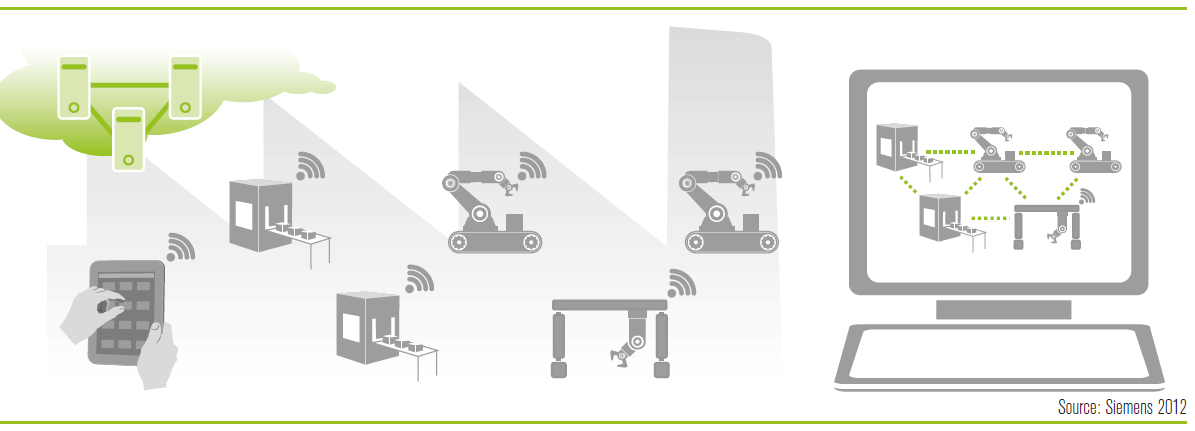
From the organizational point of view, it is important to implement Industry 4.0 technology vertically and horizontally. Vertical integration refers to the internal manufacturing process and the factory itself and includes e.g. the end-to-end integration of signals from actuators and sensors up to ERP level. It is essential to ensure flexibility through reconfigurability of manufacturing systems, which is crucial in increasingly dynamic market environments.
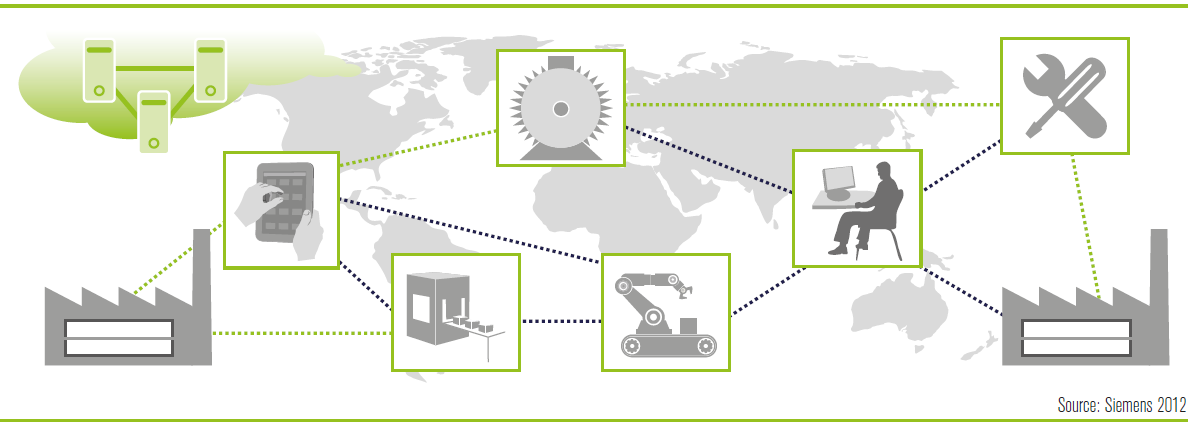
Horizontal integration takes place on the strategic level and describes the development of inter-company value chains and networks, like e.g. business models, forms of cooperation, sustainability, standardization strategies, knowledge protection and medium to long-term training and staff development initiatives. Finally, it is essential to ensure digital end-to-end integration across the entire value chain, starting at the product development stage and reaching over manufacturing system engineering to production and services, even between different companies.
After all, IoT, CPS and Smart Factories share one common goal: Freeing human resources from tasks, which can be taken over by technology, and rather focus human resources on problems that require a higher level of intelligence to be solved. According to Barreto et al. (2017, p. 1246), the Industry 4.0 revolution is therefore “causing profound changes, not only in industry but also in society, in the economic rhythm and outlook, in how work is planned and operationalized, in what way should be oriented the human-machine interactions, among other situations”.
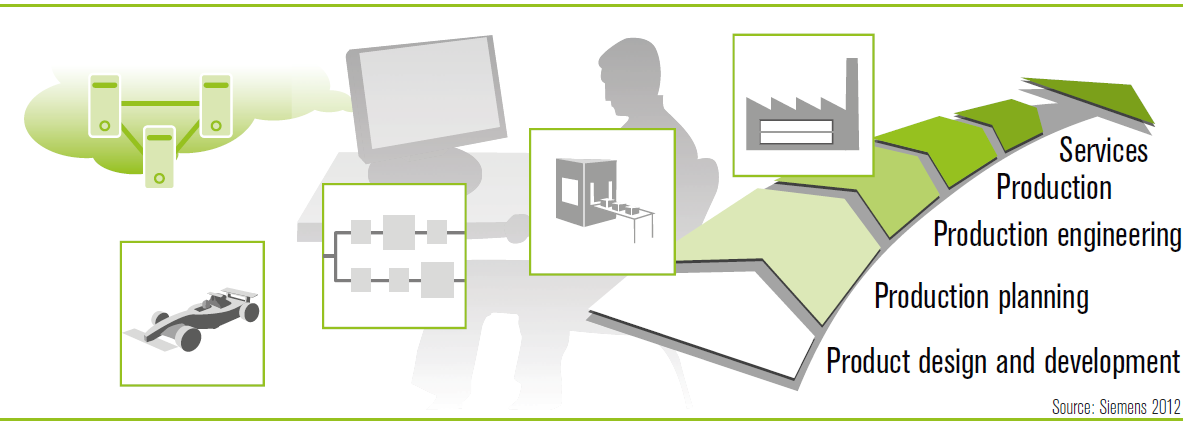
2.3 Logistics 4.0
The term Logistics 4.0 consists of two parts: The first part is the logistics part, which describes the process of “having the right product at the right time at the right place and in the right condition” (Uckelmann, 2008, p. 273). The second part is the number 4.0 referring to the Fourth Industrial Revolution and its technology. Following this definition, Logistics 4.0 generally describes implementation of Industry 4.0 solutions in logistics processes, or as defined by Barreto et al. (2017, p. 1248) “the combination of using logistics with the innovations and applications added by CPS”. Technological applications include e.g. robotics in intralogistics, autonomous vehicles, virtual and augmented reality, IoT and sensor technology. Logistics 4.0 is also referred to as Smart Logistics.
3 Trends in Logistics
The Logistics sector has undergone a rapid transformation in recent years, as the previous chapter has indicated already. The rise of digitization has not left the logistics sector untouched but transformed it rapidly since internet technology and e-commerce started their victorious march across the globe. Additionally, the competition in the sector increased massively in recent years. At the same time, several challenges arose from technological and social trends. Kersten et al. (2017) identified the following key trends:
| Exogenous trends | Endogenous trends |
|---|---|
| Cost pressure | Digitalization of business processes |
| Demand fluctuations | Business analytics |
| Government regulations/Compliance | Transparency in the supply chain |
| Individualization | Automation |
| Staff shortages | Networking/Collaboration |
| Risks/Interruptions | Decentralization |
| Complexity | |
| Sustainability | |
| Changed consumer behaviour |
They divided trends in exogenous trends and endogenous trends. Exogenous trends are highly relevant for the business environment the companies operate in, while endogenous trends impact processes and the general situation inside the company. This thesis aims to clarify impacts of current technological trends on the supply chain, which can be assigned to the endogenous business processes, but often are direct effects from exogenous trends.
3.1 Exogenous Trends
To understand the environment, in which companies operate in nowadays, it is critical to take a closer look at exogenous trends, as they often are drivers for endogenous change and transformation.
3.1.1 Cost Pressure in Times of Growing Demand
One of the greatest challenges of Logistics Service Providers (LSP) currently is the reduction of cost, as cost reduction is a major goal of their customers. According to Hadwick (2019), 61.7% of LSP indicated that their customers top priority is cost reduction, far ahead of other challenges. This puts pressure especially on LSPs, who are at the same time facing increasing demand from growing eCommerce sales, which are expected to take up an estimated 40% of the total sales volume in the US in 2023 compared to 25% in 2019 (Hadwick, 2019). In Germany, eCommerce is on the rise just as well, even though the revenue share is not as high yet (see Figure 5). Generally, the share of eCommerce is increasing, which consequently increases the demand for logistics services. Operating in this environment with a growing demand for logistics services and customers at the same time trying to decrease logistics cost, creates major challenges for companies in the logistics sector.
Share of online retail sales in total retail revenue in Germany, in percent
3.1.2 Staff Shortages
Another key driver for rising logistics cost lays in a continuous shortage of staff throughout the whole industry. For example, the current shortage of truck drivers in the US has counted 48.000 drivers in 2015 and will eventually rise to 175.000 in 2024 (Davies, 2016). The problem does not only exist in the US, but also in Europe, where the driver shortage in only six countries adds up to a lack of 127.500 drivers. Additionally, in Germany for example, two-thirds of drivers are set to retire until 2033 (Marle, 2018). In a survey, over 60% of companies indicated, they have not yet been able to adapt to the situation of low staff availability (Kersten et al., 2017).
3.1.3 Individualization, Rising Customer Expectations and Complexity
A major trend in recent years has been the individualization of products and services. This trend affects the whole supply chain, from production facilities, warehouses to logistics services. The trend of “hyper-customization” has already introduced the “Batch Size One” production, the phrase indicating the low number of identical products being manufactured. While in the past essential economies of scale advantages resulted from large batch production of the same product, nowadays highly individualized products require highly flexible and modular production lines. Technological innovation like e.g. robotics, automation and 3D printing technologies can be an answer to this challenge from the production perspective. In logistics, flexible digitized processes in warehousing and delivery concepts can be used to increase operational effectiveness under such conditions (Chung et al., 2018a). One example from the manufacturing site is the modular production line in the automotive industry, capable of manufacturing a number of different models in an almost endless number of different configurations, as briefly described in Chapter 2.2.
Growing demand for individualization is one aspect of changed customer behaviour. Another aspect, fuelled by the digitalization, is distribution channels shifting from large scale suppliers towards platforms and portals. In combination with the individualization trend this leads to greater availability of smaller scale, flexible logistic services. Finally, consumer behaviour also changes in regards to the product ranges demanded by the customers, compared to previous generations (Kersten et al., 2017). It is even described as a shift from an “Age of Affluence” to an “Age of Influence”. Consumers define themselves less from what they own, but what they do, relationships shift from transaction-based to trust-based and marketing transforms from mass marketing to personalized marketing (A.T. Kearney, 2018).
Consequently, as the number of parts, products, suppliers, and services increases, flexible and customizable logistics solutions are facing added complexity in the coordination process and therefore additional cost pressure. In a survey among logistics-focussed companies, fulfillment of customer requirements was named as top logistics goal with the highest priority. Reliable and on-schedule delivery followed as second most important goal, logistics cost as third-most-important (Kersten et al., 2017). The increasing cost pressure has already been subject of Chapter 3.1.1.
Rising customer expectations in general draw a challenge for many LSPs. A key area, where expectations are on the rise, is the last mile delivery. More than every fourth LSP reported adapting to customer demands for the last mile to be their major challenge (Hadwick, 2019). Digitalization and sustainability are two drivers behind those rising expectations, demanding a new level of customer centricity especially in SC&L businesses. This customer centricity is one, if not the core element of digital transformation. Customers expect a high level of transparency of the supply chain, which can include origin of products, a transparent flow of goods and real-time tracking of deliveries (Kersten et al., 2017). The ongoing digitalization increases demand for implementation of mobile and smart home devices in the delivery process, especially with private customers. However, largely eliminating re-delivery attempts holds great potential for cost savings for LSPs at the same time (Chung et al., 2018a).
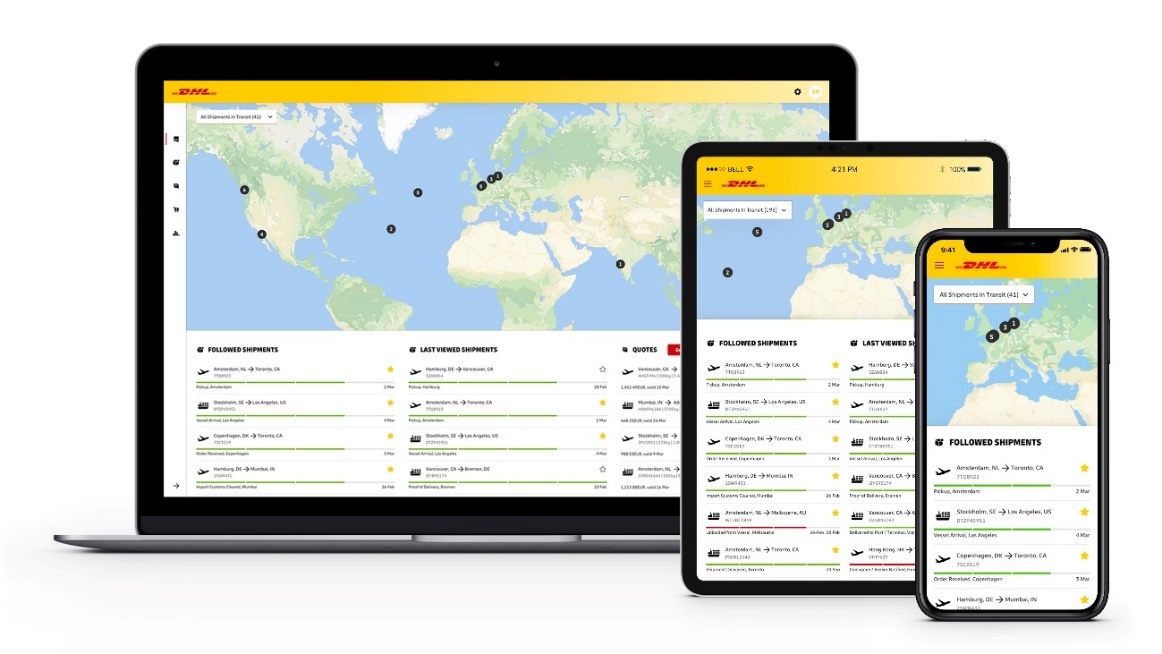
An example combining many of the above trends is the introduction of myDHli from DHL Deutsche Post DHL Group (Figure 6). It is a new customer portal and combining existing and new services in a one-stop solution. myDHLi was only introduced in May 2020 as a pilot project with a limited number of customers. Key features include user friendly interfaces, push notifications, full transparency through real-time tracking for all air- and sea shipments, real-time tracking for parcels on the last mile, a CO2 emissions calculator, and options for emission offsetting. Furthermore, transport documents are digitally available at all times, analytics on service quality (e.g. punctuality) is provided and reports on expenses and volumes as well as custom activities can be accessed (Deutsche Post DHL Group, 2020a).
3.1.4 Growing Risk and Uncertainty
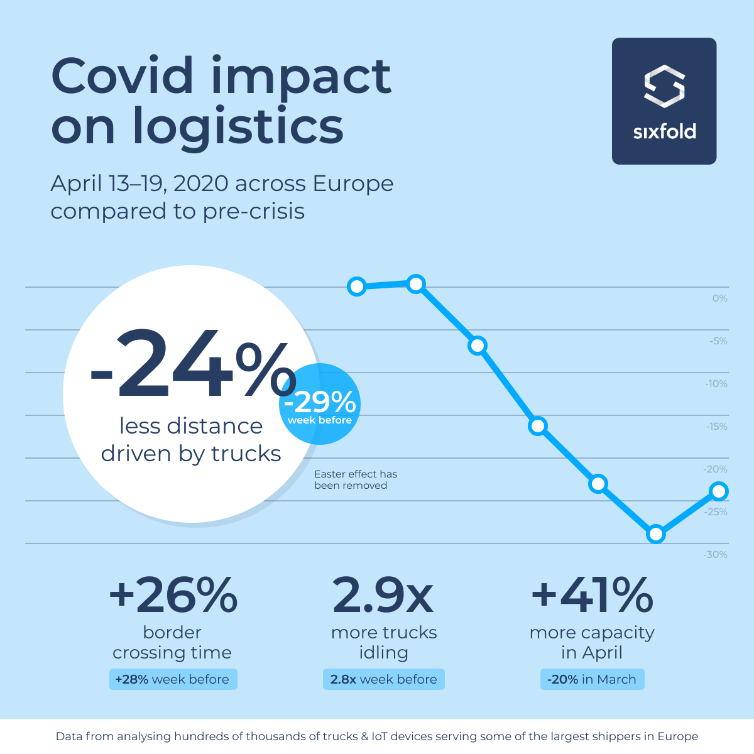
The increasing use of technology along with the globalization have increased interdependencies of businesses. Trends like the just-in-time manufacturing amongst others have made the supply chain more vulnerable against disruptions, which can quickly cause a complete standstill of the production line (Kersten et al., 2017). The outbreak of the COVID-19 virus served as an impressive demonstration for this recently. Soon after Chinese suppliers had to shut down production in the majority of their factories, a number of car manufacturers also had to shut down production, as important components from China were out of stock and could not be delivered (Gomoll, 2020). Extensive border control or completely closed borders caused major disruptions in the flow of goods, even between European markets (see Figure 7). Border crossing times and huge traffic jams were only some of the impacts.
Additional risks result from growing economic and political uncertainties, which directly influences demand in a globalized world. Import and export barriers, tariffs, and sanctions can have a politically motivated, disruptive impact on demand and in the consequence on production and sales volumes (Kersten et al., 2017). But regulation and compliance requirements have also become increasingly complex in recent years due to increasing standards in work safety, environmental responsibility, product safety and cyber security. Especially in work and environmental safety regards, companies are under close surveillance by consumers, NGOs, and government agencies in many markets. The level of complexity is high, especially since companies increasingly target emerging markets, which are often fragmented and where each individual market has its own set of rules to comply with. Strict regulation and certification requirements are also in place for product safety and integrity. They require companies to have extensive tracking capabilities for their supply chain, including subcontractors, to track down the origin of parts and ingredients of their products. Finally, due to the increasingly digitized supply chain, compliance requirements for cyber security purposes have also grown more stringent, in order to protect digital and physical assets from cyber-attacks (Deloitte, 2015).
3.2 Endogenous Trends
Endogenous trends will have a high impact for SC&L management, as business processes will be increasingly supported by information-, communication-, and data processing systems. While exogenous trends are externally driven, endogenous trends impact processes inside the companies. Businesses with better abilities to adapt to those digitalization trends, tend to perform better adapting to customer-driven trends and customer-driven requirements (Kersten et al., 2017). But current endogenous trends and their digital approaches hold great potential in numerous ways, e.g. for cost reduction, productivity increases, customer relationship improvements and development of new business areas. In their trend report, Kersten et al. (2017) identified the following endogenous SC&L trends:
3.2.1 Digitalization of Business Processes
To fully integrate digital solutions, the business processes themselves must be digitized. This includes implementation of information, communication, and data processing systems, enabling data exchange along the value chain via defined interfaces or uniform systems. One step is to digitize operations like e.g. pricing and routing, based on advanced analytics. Another way to improve internal efficiency is to use digital shopping solutions for customers as a chance to enhance visibility of operations inside the company. Digital solutions can also be used for process automation purposes, e.g. using e-auctions to digitize procurement. Maintenance operations can also be supported by digital monitoring, to implement predictive maintenance saving time and costs. Finally, efficiency in warehouses can be increased by complementing operational processes with technological solutions like robotics, artificial intelligence, and augmented reality technology (Boston Consulting Group, 2020)
3.2.2 Transparency in the Supply Chain
Nowadays, value chains become more and more international and customers demand an increased level of transparency of the supply chain, as discussed in previous chapters. Therefore, consumers and the company itself can be interested in a higher level of transparency. For companies, a greater amount of data being available internally and externally provides new information on supply chain participants and risks. There is also a number of technological implications helping to increase the level of transparency in the supply chain, such as assessment tools for compliance along the supply chain, external supplier data, tracking and tracing capabilities of materials or even individual products, and communication platforms to inform and engage end users (Linich, 2014).
3.2.3 Networking and Collaboration
As business operations become increasingly digitized and data-based decision making is put into place, it supports networking and collaboration between companies, as data can be shared a lot easier and new entities can be integrated into processes much faster. Therefore, to gain competitive advantages companies expand their networking activities on the supply chain level vertically and horizontally. An example for vertical networking is adding partners within the supply chain, while horizontal integration describes collaboration with universities or associations. In an increasingly competitive environment these networks provide advantages in flexibility and adaptability to fast paced transformation. (Kersten et al., 2017). This also sparked the evolvement of so called “supergrid logistics systems”, which connect numerous small- and medium-sized, specialized LSPs along several supply chains to one network, to provide national and international logistics services. This network can then be accessed cost-effectively by companies not having their own logistics network. Given the service-oriented business model, it is also referred to as Logistics-as-a-service (LaaS). Two major advantages are the reduction of infrastructure and development costs, and the greater scalability potential. However, a critical requirement for supergrid logistics is standardized service modularization and seamless information management, to offer seamless integration of partners (Chung et al., 2018a).
3.2.4 Business Analytics
As described previously in Chapter 3.2.1, a growing number of business process is digitized, which makes it one of many new sources of data available to companies nowadays. This data can be used to forecast future sales and therefore to plan manufacturing or stock levels to be held. But in order to collect and analyse such big data sets, technologies and skills are essential. Especially skilled personnel is scarce, according to companies. However, once personnel and technologies are available, patterns in customer behaviour or production processes can be analysed and turned into economic profit, e.g. by cost saving due to leaner production- and warehouse setups (Kersten et al., 2017). Predictive analytics ranked third, when supply chain focussed companies were asked what technology will have the biggest impact on the industry in the next 5 years. Artificial intelligence and machine learning were first, second or third choice for over 70% of participants. Consequently, supply chain businesses see great potential in data- and especially predictive analytics (Hadwick, 2019). Business intelligence and analytics is highly data driven, which closely links it to Big Data. As more and more data is becoming available, the potential to analyse it increases simultaneously. Especially since the rise of IoT including its mobile and sensor technology, data availability has increased massively for LSPs but also the manufacturing industry (Chen et al., 2012).
3.2.5 Automation
Business processes are not only increasingly digitized, but also automated. For example, even though warehouses and ports rely on autonomous vehicles since many years, the ongoing development of vehicles being able to autonomously move in non-contained areas puts the topic of human-machine interaction back onto the agenda. Technological implications include e.g. robots, drones and autonomous trucks, all transporting goods automatically from one place to another (Kersten et al., 2017). A deeper analysis of the technology and its impacts on the supply chain is subject to Chapter 4.1. Along with the growing issue of staff shortages, increasing automation holds great potential to free human resources from tasks, which can be taken over by technology, and allocate human resources more effectively to problems requiring a higher level of intelligence.
3.2.6 Decentralization
A decentralized architecture generally includes two components: The first one is physical structures and processes. The second one is the technological architecture allowing decentralized control of increasingly autonomous machines and production lines, as they are typical for the CPS in Industry 4.0. An example is the decentralized allocation of an increasing number of warehouses to ensure fast and cost-effective delivery of goods to customers. Decentralized architecture like blockchain is also on the rise, as it offers a reliable source of data which can be accessed anywhere anytime by computers. The concept of blockchain technology is further discussed in Chapter 4.3.
4 Selected Technological Trends Under Review
In this chapter, four trends are taken a closer look at. First, what were developments in the past, what are key factors of the trend and what impact will it have on the overall supply chain.
4.1 Robotics and Autonomous Vehicles
4.1.1 Background
In order to increasingly automate warehouse and logistics operations, robotics is a key component achieving this goal. They deliver a solution for several challenges the logistics industry is currently facing, such as staff shortages, growing order volumes, individualization of products and a growing variety of items to be kept in stock. Automated systems however can handle complex tasks and provide 24/7 availability. And robotics is most likely going to become even better, as robots become faster, more accurate, flexible, and affordable. Especially once the price/performance ratio improves, the technology is expected to rise even faster. Additionally, 80 % of warehouses are still operated manually. Robotics can be used as assistant for pickers, packing and unpacking pallets, unloading boats, trains, and trailers or as assistance for local deliveries. Future opportunities are e.g. being able to meet fluctuating demands, increase productivity, health and safety, and shift scarce labour resources towards more complex tasks. Challenges are currently strict legal restrictions regarding the use of robots near humans and a generally very broad regulatory framework, which needs to be developed further (Chung et al., 2018a).
In a study by Kersten et al. (2017), robotics and automation systems were both ranked a high relevance by companies from the manufacturing industry, for the obvious reason that both industrial robotics and automation are widely used in this industry since a long time. In the logistics industry however, robotics and automation were only rated moderately relevant, which defers with expert opinions. Experts expect simple tasks to be automated in the long term, also in warehouses of logistics service providers, by using robotics technology.
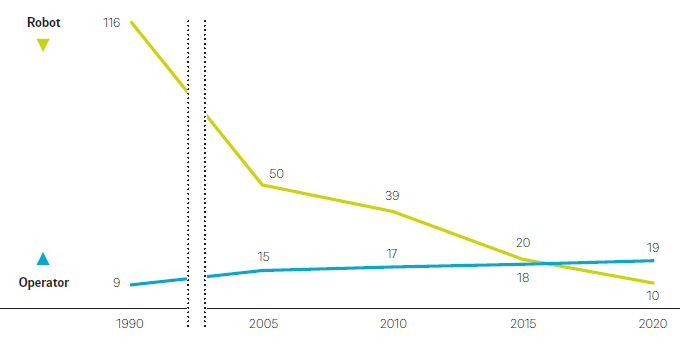
A clear argument in favour of this scenario is the rapidly decreasing cost of robotic technology. According to Roland Berger (2016), robotics can generate a positive return on investment (ROI) within three years, once the cost per unit falls to 100.000 - 110.000 EUR/unit, thanks to a 20-30% productivity gain if the company operates in mature markets. Numerous low-cost solutions already offer robots for far less than 100.000 EUR/unit, e.g. Rethink Robotics with its Baxter robot costing 22.000 USD in 2015. In the industrial robot segment prices halved the first time in the 15 years between 1990 and 2005 and then again between 2010 and 2015 in only five years. Similar developments can be expected for the more complex logistics robots under development today. At the same time, cost for human labour is constantly increasing, like e.g. in France (see Figure 8). Along with the rising complexity and requirements due to the rise of E-commerce, the use of logistics robotics becomes more and more attractive, as it solves numerous challenges the industry is currently facing.
4.1.2 Technological Developments
The first automated warehouses were developed in Germany in the 1960s, when aisle-captive cranes were used to store and retrieve bulk inventories in the first high-bay unit-load warehouses. These automated storage and retrieval (AS/R) systems became increasingly popular in the following years and could also be used in combination with manual parts-to-picker systems, where the large container was delivered to the picker to take out the goods required to fill the order, and afterwards moved back to its place inside the warehouse.
More recently, autonomous vehicle-based or shuttle-based storage and retrieval systems (AVS/RS) gained popularity, as they offer a greater level of autonomy and flexibility. They are based on a rack system and a shuttle travelling horizontally through the aisles on rails and using lifts for vertical movement. There are also diagonal AVS/RS systems, where the single robot can perform horizontal and diagonal movement on a rack between the isles, which again offers greater flexibility and improves efficiency.
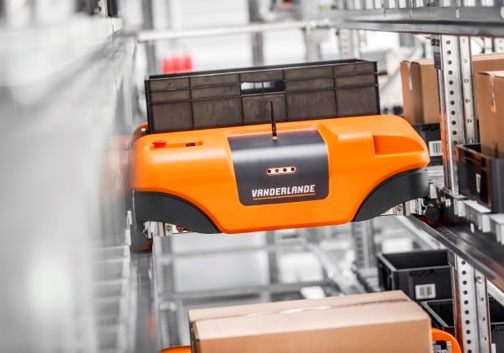
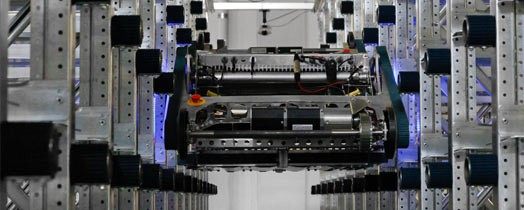
Figure 10 RackRacer Shuttle by Fraunhofer moving horizontally and diagonally (Source: Fraunhofer IML)
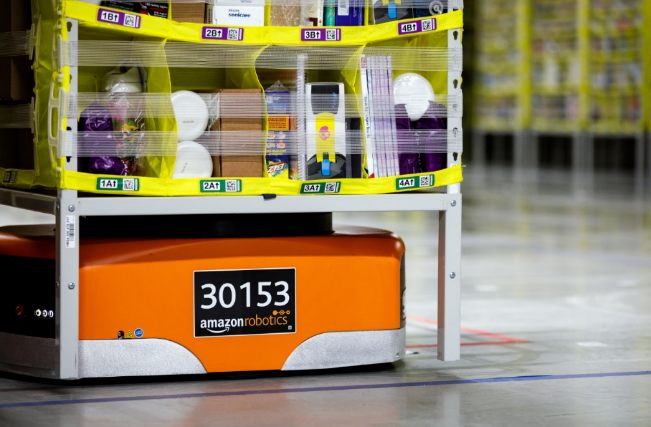
Recently, online retailers have increasingly started to use Robotic Mobile Fulfillment Systems (RFMS), to meet their requirements regarding a large number of incoming orders but with a low number of items per order. Therefore, items must be easily accessible and single items must be quickly available, without having to unpack a pallet first for example. This is where robots come into play, as they are able to lift and carry movable shelves and deliver them straight to the picker’s workstation. This workstation can then be ergonomically adapted to the picker to reduce minimize body stress. The picker can take out the items needed, place them into an order basket and then the robot stores the shelf somewhere in the warehouse. The location usually depends on the frequency of orders for items contained in the pod, to minimize distances for the robots (Azadeh et al., 2017).
4.1.3 Example Amazon
When Amazon bought Kiva Systems in 2012, that was the start of revolutionizing warehousing for e-commerce. Kiva Systems had the know-how and capacities, to develop robots, that would allow shelves and racks to travel to the order pickers, rather than the pickers walking through the aisles collecting the items for the orders. Implementation of the technology allowed productivity increases for up to 100%, while at the same time robots could be flexibly added to and removed from the ecosystem, depending on the demand. Limitations occur in regards of the picking process itself, as this process is much more complex to automate with products of all different shapes and sizes (Hoberg et al., 2019).
Besides a higher process efficiency, the implementation of RFMS systems can also save a lot of space. As wide aisles for the pickers become obsolete, there is more space for storage. At the same time, as the moveable shelves are not as high as traditional warehouse shelves, they can be stored on different levels. As land is expensive and logistics space scarce, the more efficient use of space can be a significant cost advantage. Since Amazon has taken over Kiva systems, they are developing robots and software themselves, perfectly adapted to their needs and have rebranded Kiva to Amazon Robotics. In 2017, according to a Bitkom Survey only 16% of Amazons competitors used a similar technology, which has put Amazon with its more than 80.000 robots in the lead in warehouse automation and only increases their competitive advantage even further (Hofer, 2017).
4.1.4 Autonomous Vehicles
Besides the adoption of autonomous robots in warehouses, a lot of research and development is focussed on autonomous driving outside the warehouses. Examples are autonomous cars, trucks, or ships, which will be able to move fully autonomous in a dynamic environment like e.g. road traffic. There is a number of projects in place already to test and develop vehicles with autonomous capabilities, such as the Uber self-driving cars or Rolls-Royce remote-controlled ships (Reimann, 2017). However, as Kersten et al. (2017) illustrate, a large adoption of autonomous vehicles is not going to happen in the next five years, but rather in the long term, due to a missing legal framework and technological limitations. Therefore, participants of the study gave the topic only a moderate relevance.
Different Stages of Autonomous Driving
The German Federal Highway Research Institute (BASt) has provided a non-final, but guiding classification for autonomous driving technologies in a 2012 report (Gasser, 2012). They identified five different levels of autonomous driving capabilities:
- Level 1 – Driver only: The driver keeps full control over the vehicle, neither longitudinal nor transverse guidance is taken over by technological assistants
- Level 2 – Assisted Driving: Assisted systems temporarily take over control of either longitudinal or transverse guidance. In the meantime, the driver is kept in charge of the respective other driving task.
- Level 3 – Semi-automated driving: Longitudinal and transverse guidance of the vehicle is taken over by the assistance system over a certain time. However, the driver is still responsible for permanently monitoring the system and must be able to take back control over the vehicle at any time. Examples include lane-keeping assistants or automated parking assistants.
- Level 4 – highly-automated driving: Longitudinal and transverse guidance of the vehicle is taken over by the assistance system for a certain time in a certain, fully pre-defined scenario. The system is able to detect when it leaves the pre-defined scenario and can then create a minimal risk condition, such as notifying the driver to take back control or stopping on the emergency lane.
- Level 5 – Fully-automated driving: Longitudinal and transverse guidance of the vehicle is completely taken over by the system. The car is able to navigate without human intervention and is fully capable of managing all occurring scenarios in a dynamic environment. The former driver takes over the role of a passenger and could theoretically sit in the backseat of the car.
Legal Framework
In 2017, the German government introduced a new law to provide a legal framework for highly- and fully automated driving. According to the new law, the driver mainly remains in charge and must be able to intervene and take back control at any given time. Therefore, the driver must be able to deactivate the system and the system must always be overridable by human commands. In case of an accident, a “Blackbox” will provide information on the system status at the time of an accident. Only if the human has clearly fulfilled his obligation to monitor the system and only use it in the pre-defined use cases, the manufacturer will be in charge for the accident (Bundesregierung, 2017).
On Road - Self-Driving Trucks
Belonging to Google, Waymo has been developing autonomous cars since 2009. Their approach is based on software and hardware components, which they fit to existing car models rather than developing their own vehicles. Since 2018, the system is also fitted to trucks (Waymo, 2020). The autonomous system collects its information from a variety of sensors and technology: Light detection and ranging (LiDAR) scanners, radar sensors and a high precision camera above the windshield allow the truck to constantly monitor the traffic situation around it.
As 400.000 trucks are involved in fatal accidents each year with the main cause being human error, autonomous systems have the potential to drastically decrease these numbers. At the same time, they tackle the growing issue of driver shortages described earlier. However, there a numerous problems that still require further work to be solved, such as accelerating and breaking, predicting behaviour of other drivers, navigating construction zones and dealing with unexpected hazardous situations like sudden bad weather (Davies, 2016).
On Sea – Remote-Controlled Ships by Rolls-Royce
Since 2005, Rolls-Royce is engaged in research on autonomous ships. On sea just like on road, most accidents are caused by human error and could most likely be prevented by autonomous technology. So far, Rolls-Royce has already launched projects with ships remotely controlled from land. However, for 2020 the company expected very few autonomous vessels operating in local waters e.g. in Norway. In 2025 they suggest that remotely controlled ships could be introduced in coastal areas, in 2030 also in deep sea areas and in 2035 largely autonomous ships could possibly be realistic. Due to the reduced space requirements for personnel, the ships would have more available space for loads. At the same time power consumption would be reduced for the same reason. Together with reduced labour cost, this transformation would provide serious cost advantages, even though the initial cost would be higher (Reimann, 2017).
4.1.5 Discussion
Robotics and autonomous vehicles are set to disrupt the way humans and machine interact along the value chain. They increasingly replace humans in the actual picking process in the warehouse. Largely autonomous warehouses are becoming reality, and the advantages of such systems are clear: high transparency, low error rates and optimized costs. Especially as labour cost is on the rise and work force availability is low, machines provide a welcomed opportunity for logistics service providers and industrial manufacturers.
Additionally, machines can provide 24/7 availability with the same level of productivity. Robotic systems also offer a high level of flexibility and scalability, as often robots can be added to and removed from the network as required. Even if robots have a technical failure, they can be flexibly replaced most of the time and do not cause interruption. Overall, they can offer a cost-effective and efficient option, to take over often physically demanding tasks from humans and effectively reduce error rates.
For the supply chain, robotics and autonomous vehicles mean a high degree of automation for the future. Inside the Industry 4.0 ecosystem, the technology can seamlessly be integrated and connected with CPS in the production and logistics stage. But not only during the manufacturing stage, but also in delivery operations, delivery robots and drones could become an integral part of the supply chain. In cargo operations, autonomous trucks and boats can lower the transport cost and offer greater flexibility, especially in times of increasing e-commerce operations and growing demand for shorter delivery times. This is again supported through automated warehouses, which will help, in seamless integration with other Industry 4.0 technologies, to further increase the level of supply chain transparency.
However, there still are some drawbacks and problems to be tackled in the future. Even though robotics can provide a solution for the scarce resource of logistics personnel, the rise of robotics and autonomous vehicles requires highly specialized staff from the technology space, for which availability is at least just as low as for logistics staff, if not even worse. The European Commission expects the number of unfilled jobs in the European Information and Communications Technology (ICT) sector to reach 756.000 by 2020 (Kiss, 2017). Examples include data mining experts, programmers or qualified managers with knowledge and experience in technology topics. The digital transformation, including robotics, demands a very different skill set from employees, for which the job market does not yet seem to be too well prepared, as staff shortages are not only a national but international phenomenon.
At the same time, ongoing discussions on social and ethical questions continue and may affect the adoption of robotics, autonomous vehicles, and automated warehouses. With a tighter focus on human-machine interaction, labour representatives increasingly raise concerns about jobs disappearing and replacing human work by machines. A PwC study suggests, that 38% of jobs in the US are threatened by the risk of automation. The same goes for 35% of jobs in Germany, 30% of jobs in UK and 21% of jobs in Japan (Hawksworth et al., 2017). These numbers illustrate the potential of upcoming discussions, which are only going to intensify once autonomous vehicles and robotics find wider adoption in logistics and industry. Right now, the initial cost for setting up such systems are decreasing, but still high. Therefore, they can be a barrier to invest in the technology especially for smaller companies, even though smaller businesses could benefit strongly from this transformation.
4.2 Crowdsourcing
4.2.1 Crowdsourcing – A Major Trend
The term crowdsourcing is a neologism from the words “crowd” and “outsourcing”. It describes the process of outsourcing business activities, not to other businesses but to a large crowd of people. Crowdsourcing can be assigned to the broader phenomenon of the sharing economy, which again can be divided into four broad areas: Recirculation of goods, increased utilization of durable assets, exchange of services and sharing of productive assets (Schor, 2014). According to Carbone et al. (2017), crowdsourcing is largely based on the activation of e.g. financial, intellectual or material resources, which can then be used for business activities enabled through information technology platforms like websites and mobile applications. Consequently, there are numerous areas of application for crowdsourcing. As this thesis focusses on SC&L transformation, crowdsourcing in logistics will be the main area of crowdsourcing to be focussed on. The rise of information technology is a major enabler for the increased utilization of assets through crowdsourcing, as real time data processing and mobile devices opened up new opportunities for the communication and resource allocation between companies and the crowd.
4.2.2 Crowd Logistics and Its Application Scenarios
Following the previous definition of crowdsourcing, crowd logistics describe the outsourcing of logistics processes and services to the crowd, with coordination largely based on technical infrastructure (Mehmann et al., 2015). “Crowd logistics is done through collaborative platforms and mobile apps that connect individuals and firms to peers (…) in order to make the best use of distributed, idle logistics resources and capabilities” according to Carbone et al. (2017, p. 242). Additionally, the performance of basic logistics services by individuals on an ad-hoc basis is emphasized. Delivering the right product at the right time at the right place and in the right condition are the main objectives in logistics (Uckelmann, 2008), they are also highly relevant for crowd logistics services. There are four broad categories of crowd logistics: Crowd storage, crowd local delivery, crowd freight shipping and crowd freight forwarding.
Crowd Storage
Crowd storage focusses on the utilization of empty property spaces. The high real-estate prices in larger cities often are the reason for traditional storage businesses to move their storage facilities out of the city centres (Carbone et al., 2017). In times of increasing demand for same-day delivery, crowd storage services can therefore provide a cost-effective alternative in a better, more central location in larger cities. At the same time, it provides flexible scalability, if space is only required for a shorter time period due to seasonal or short-term demand fluctuations.
Crowd Local Delivery
Crowd local delivery increases the utilization of transport resources like cars and vans for pick-up-, transport- and delivery services. Uber offers such services e.g. for freight, food, and people transport. Uber serves as a good example for the potential in crowd delivery services. Expanding rapidly, revenues have more than doubled since 2016 and rose from 6.5 billion in 2016 to 14.1 billion in 2019 (Uber, 2020). The platforms main tasks lay in the provision of GPS scheduling software and pricing systems, in order to coordinate the drivers and establish the connection with the customers. The drivers will then take over tasks like pickup, driving, riding, and delivering.
Freight Shipping Services
Freight shipping services allow users to ship non-standard items within a country or continent, mainly on road vehicles to avoid high transportation costs with traditional postal services, due to the unusual measurement of the goods shipped. The network effect is important, in order to connect a large number of destinations for the senders. While the platform is in charge of providing a pricing scale and GPS systems, the crowd is responsible for the loading process, transport, and final delivery of the goods.
Freight Forwarding Services
Finally, freight forwarding services aim to match destinations and origins of participants to provide an international network and allow access to small products, that can be sourced only or more cost-effectively abroad. Contrary to freight shipping services, the focus lays on smaller and lighter products and only to a limited quantity. The crowd´s responsibility is mainly the transport process, starting with handling and packing the goods, completing formalities, and conducting the final delivery. The platform often assists with customs duties and provides respective calculation tools.
4.2.3 Adoption of Technological Trends for Crowd Logistics
From a technological perspective, crowd logistics have largely profited from real-time data processing, optimization, modelling, and the rise of algorithms. This allowed e.g. routing algorithms to plan and adapt delivery routes in real-time and therefore increase efficiency. At the same time, the crowd is more connected than ever before, which simplifies the communication between the different parties involved. Generally, the digitization of the society is a main driver for the whole crowdsourcing sector, including crowd logistics (Mehmann et al., 2015).
Thanks to sharing platforms and utilization of networks and assets, the sharing economy dramatically increases efficiency of processes. Especially the real-time data flow between shippers and carriers allow seamless matching of demand and capacities. Furthermore, traffic delays can be reduced, loading operations sped up, communication lags minimized, and process efficiency can be increased in quoting, pricing agreements, shipment tracking and payment collection. Special focus lays on services and coverage regarding the first and the last mile, as companies are facing growing challenges in these areas through exogenous trends, as described previously in Chapter 3.1.3. However, there are also services available for other areas along the supply chain, such as the offer of on-demand workforce for seasonally fluctuating demand situations (Chung et al., 2018a).
4.2.4 Current Adoption of Crowd Logistics
There are specialized companies like Uber, offering crowdsourced delivery services for all kinds of goods. Uber offers e.g. ridesharing, food delivery, logistics services and last mile delivery and courier services. And there is a number of other companies, offering same-day delivery of parcels in the last mile, like Postmates, Deliv and Hitch.
Deliv
Deliv offers a last-mile delivery solution in 35 markets in the US for same-day delivery, by matching senders and local couriers. The sender can choose the exact time for the parcel to be delivered, track it in real-time and then have it delivered by one of many couriers from the crowd. Everything can be monitored at any time on the delivery dashboard. The services are offered for small businesses as well as long term and large-scale enterprise customers. The couriers provide deliv a schedule when they are available and then receive orders within the booked timeframe. They can simply log into the mobile app and check for deliveries assigned to them. Requirements for becoming a driver are rather simple, which makes it attractive to a large group of people (Deliv, 2020).
DHL myways
However, as traditional logistics companies’ market shares are directly threatened by the cost-efficient crowd logistics services, they are forced to adapt, in order not to lose the direct connection with the customer. Therefore, DHL for example did a test run for crowd sourcing already in Stockholm in Sweden in 2013, where the crowd could pick up parcels from DHL service points and then take over the last mile delivery process. But customer expectations in Sweden were different at the time, as last mile delivery was not common. The recipients rather had to manually pick up their parcels at the pick-up points before. Thanks to DHL myways they could create an offer on the DHL myways market place offering between 3 EUR and 6,50 EUR for delivery at a certain date and time, and someone from crowd was then able to accept the offer and take over the delivery (Randler, 2015).
4.2.5 Discussion
As the lack of skilled workers along the supply chain is constantly increasing, crowdsourcing can be a way to access new sources of personnel and at least improve the situation in road transport and last mile deliveries. A shortage of skilled drivers is not only reported for the trucking industry, but also for last mile delivery drivers. Since 2015, job postings for delivery drivers have more than tripled on Indeed.com, as E-commerce shows no signs of slowing down its growth and food delivery gains popularity as well (Sasso, 2018). In these cases, crowdsourcing provides easy access to a large number of delivery drivers, as the gig-based economy is becoming more popular and basically everybody can participate. At the same time, it offers companies more flexibility in their logistics planning, as drivers can often be booked short-term or even in real-time, like e.g. in food deliveries. The sender company does not need to hire delivery drivers spending a long time waiting for incoming orders anymore or conclude long-term contracts with logistics companies, but rather have a driver from the crowd take over the delivery on short notice, once the order has arrived. This flexibility is also a great advantage for companies facing fluctuating demands.
Due to the larger number of potential drivers, it is furthermore possible for companies to offer individual and more exact time slots for the delivery of goods, especially in the last mile. A traditional delivery company like DHL has fixed routes for the drivers, who will then arrive in a predictable, but not adaptable time frame at the receiver. With crowdsourcing, in most cases every driver only has a limited amount of stops on his tours and drivers are at service at different times of the day. The customer can pick a date and time, when he ideally wants to receive his parcel and the parcel will be automatically assigned to a driver working during that time frame in the area. This allows in many cases even same-day deliveries. The continuously increasing demand of individualization and the customer-centric approach, which have been identified as key logistics trends in Chapter 3.1.3, support this new approach of crowdsourcing for last-mile deliveries.
But the better integration of the processes especially in largely digitized organizations does not only reduce lead times, but also costs. As described earlier in the chapter, the real-time data flow allows for seamless matching of capacities on trucks and demands, more efficiently than traditional load boards would allow it. Loading times can be reduced, administrational tasks be automated, and communication problems be minimized through digital processes and administrational tasks. The cost reduction is especially beneficial, as the logistics sector is facing increasing cost pressure, as described previously in Chapter 3.1.1.
Finally, fundamental sustainability advantages arise from the better utilization of resources, as capacity- and demand information is digitally available and can therefore be matched more efficiently, which increases the load factor. At the same time, on the platform side often real-time data processing and clever routing algorithms allow for avoiding traffic congestions and planning the best route, while always adapting it to the current conditions. This pairs less fuel consumption with more effective routing, which reduces the overall carbon footprint of the business even further. Not only does it result in significant cost savings, but customers nowadays expect companies to focus more on sustainability internally and externally alike and to reduce their carbon footprint, respectively.
However, besides numerous advantages, there are also some drawbacks and open problems. One of them is the question of risk and reliability, as the members of the crowd are not well known to the platform offering the services. In many cases, crowdsourcees must undergo some sort of ID verification and pass a background check, however personal interaction between the platform and the driver is the exception. Therefore, it adds an increased level of uncertainty and reduced transparency to some stages of the supply chain, like e.g. last- or first-mile delivery. Additionally, as people are not pre-selected through personal interviews, quality of work will mainly be measurable from feedback, after the crowdsourcee already had customer contact. The quality of work received can therefore vary, as skills and abilities of people are not transparent in advance.
Depending on the individual task, it might also be hard sometimes to find somebody to take over unattractive work. That could be e.g. unattractive routes or trips, which take a lot of time for comparably low reward. An example is DHL myways, where some trips still had to be taken over by classic DHL drivers, who did not have the choice whether or not to do the trip and most likely got paid on hourly basis anyway, rather than on a per-gig-basis. This might sometimes force companies to be more flexible and use a mix of different solutions, rather than relying solely on crowdsourcing or traditional delivery services.
Finally, as discussed before, there are often no longer fixed-term contracts, which adds more uncertainty. Depending on the company, rates in crowdsourcing are not fixed and depend on a variety of factors. Having negotiated long-term contracts with logistics providers, made prediction of logistics cost easier, which can be more difficult with crowdsourcing.
Overall, crowdsourcing creates great opportunities for todays digitized businesses. It will realize potential efficiency increases through using information technology and connecting demands and capacities. It will be interesting to see, whether traditional logistics providers will also take on such opportunities and adopt similar business models, as they are facing huge staff shortages. DHL myways has been an example, but as it was only a test run, time will tell whether such concepts will soon become reality in the world of logistics service providers.
4.3 Blockchain
4.3.1 The Concept behind Blockchain
Even though similar theoretical concepts existed before, the blockchain technology as it is commonly known today goes back to Satoshi Nakamoto, who published the Bitcoin whitepaper in 2008 introducing a peer-to-peer version of electronic cash. (Nakamoto, 2008). Blockchain allows the immutable, algorithmically regulated recording of asset ownership and transfer of assets. By introducing the blockchain, it was possible to effectively eliminate the double spending problem in digital transactions, meaning it was ensured that digital funds could no longer be spent twice. While it is practical that digital objects like e.g. images can be copied and sent to many email addresses at a time, for a digital peer-to-peer currencies this copy and paste procedure would pose a major problem. In recent years cryptocurrencies increasingly gained in popularity. Many industries identified potential use cases for their own business, not necessarily for cryptocurrencies but the technology behind them. In the following paragraph, first an overview on the technological background of blockchain is provided in Chapter 4.3.2. Afterwards, use cases are discussed in Chapter 4.3.3, followed by a discussion on the impacts blockchain technology will have on the supply chain in Chapter 4.3.4.
4.3.2 Technological Background
Several different technologies have been adopted to create blockchain technology and enable peer-to-peer transactions that are no longer controlled by a central authority. They are discussed in the following paragraphs.
Recording a Transaction on the Blockchain
Generally, transaction records are stored inside the individual blocks. The number of transactions stored in one block depends on the block size and the size of the transaction. A transaction describes moving assets from one public key or address to another, authorized by the private key. The public key is effectively a public address which can be used by others to send transactions to the owner of the address, similar to an email address. The private key is necessary for outgoing transactions from the related public key and serves as authorization to initiate a transaction, similar as the password for an email account. The blockchain with its individual “blocks” serves as an algorithmic construct to ensure that transaction data can be immutably recorded in the ledger. Once a user initiates a transaction, a hash is generated based on the transaction data. Cryptographic hash functions are explained further in the next paragraph. The user signs the transaction with his private key encrypting the hash value to send the encrypted hash and the transaction data to the network in the next step. With the help of the public key, the encrypted hash can be decrypted and in the same step verified, as the public key is generated from the private key. After the hash and the transaction data have been successfully decrypted, the transaction can be successfully verified and the block can be added to the chain (Zheng et al., 2018). Every system participating in the verification process is called a “node”. Every node possesses a copy of all previous transaction data (the ledger) and continuously updates it through the network. This decentralized system of verification is called Distributed Ledger Technology (DLT). Every node is assigned a vote. Once a new block is running through the nodes for verification, each node can vote for or against the legitimacy of the new block. This is a major security feature that can only be exploited in the event, that an attacker controls more than 50% of the nodes. In this case a block with false transactional data could be validated. However, due to the nature of block verification often being tied to some form of economic cost (electricity, cost of nodes etc.), it would be highly unlikely for anyone to ever achieve this in a blockchain of significant scale.
Cryptographic Hash Functions
With the help of a cryptographic hash function, it is possible to create a unique output value for an input value. The function creates the output value (digest) through application of a mathematical function, wherefore the output will remain the same as long as the input does not change. Once the input value changes, the output value will also change. In many blockchains, Secure Hash Algorithm (SHA) delivering a 256 bits output (SHA-256) is used as cryptographic hash function, creating a 64-character output string. Cryptographic hash functions are preimage resistant, second preimage resistant and collision resistant (Yaga et al., 2018):
- Preimage resistant: It is computationally infeasible finding the input value from the output value, while it is easy to compute the output value from the input value. The function therefore only works one-way (e.g. given the output value and finding x for hash(x) = digest)
- Second preimage resistant: It is computationally infeasible finding a second input value delivering the same output value from a given input- and output value (given x, find y that hash(x) = hash(y))
- Collision resistant: It is computationally infeasible finding two inputs delivering the same outputs (e.g. x and y -🡪 hash(x) = hash(y))
Cryptographic hash functions are widely adopted in the blockchain environment. In blockchain, two key functions of cryptographic hash functions are deriving addresses from the public keys and securing the information within the blockchain to make it immutable.
Asymmetric-Key Cryptography
Asymmetric-key cryptography is often named public key cryptography and lays the basis for the private/public key system used in blockchain. It implies a mathematical relation between the private key and the public key. The technology allows to digitally sign transactions, as information can be encrypted with the private key and decrypted with the public key. Once a user signs or rather encrypts a transaction with the private key, everybody can check whether the sender was in control of the private key by trying to decrypt the information with the public key. As the public key is mathematically related to the private key, only the matching private key could have been used to encrypt the message, if decryption with the public key was successful. Therefore, it is obvious that the sender was personally in control of the private key and therefore authorized to execute the transaction, unless the private keys were stolen for example. For that reason, as the name suggests, private keys must be kept private, since anyone having control over the private key can initialize transactions and is in control over the funds stored on the actual address. Contrary to the symmetric-key cryptography the private key can remain private in asymmetric-key cryptography, as decryption is possible by using the public key. In symmetric-key cryptography, encryption and decryption is undertaken by one secret key, which must be shared between the two parties. Therefore, a trust relationship must be established in advance to share such secret keys – in asymmetric-key cryptography no such trust relationship must be established, which is a key criterion for a large public network like the blockchain to function.
Technical Implications and Decentralized Consensus
A block on the blockchain consists of different elements and is a block of information containing details on transactions. It consists of two parts, the block header and block body/block data. The block header contains a timestamp, the nonce, the hash of the block data and the hash of the previous block header.
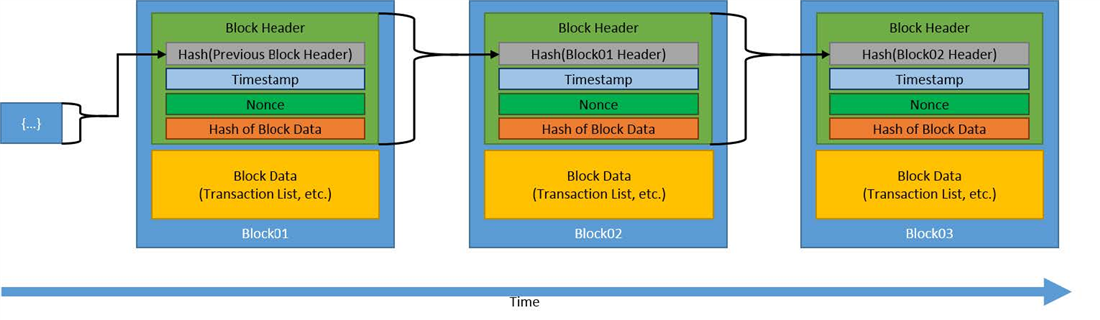
The block header starts with the hash of the previous block header, which is a key security feature of the blockchain in order to implement immutability of previous blocks and significantly increase the effort required to subsequently manipulate the data stored on the blockchain. As described earlier, the hash is unique and changes as soon as the hashed information changes. Figure 13 illustrates, how this technology is used for immutably storing information. The block header always includes a hash of the previous block and a hash of the block data in the current block. Building block after block, each block refers back to the previous block as it contains the hash of its block header, which again includes the hash of the block data of the previous block. This way, the data is not only stored in one block, but is still indirectly included in the following blocks through various hashing operations in between. If someone now tried to change the block data in Block01 for example, the hash of the block data in the block header of Block01 would change accordingly (see Figure 13). In Block02 however, the original hash of the block header of Block01 still exists and does no longer match. Therefore, changes in a block can easily be detected and would simply be overwritten. To change the data on the blockchain, the attacker had to be in control of more than 50% of voting power and have the computing power to re-hash all the blocks following the manipulated block. Depending on the number of blocks that have already been published following the target block of the attack, the attack quickly becomes uneconomical, e.g. due to the high electricity cost caused by the immense computational effort required for recalculating all blocks following the targeted block.
The nonce is an important element in the consensus model of Proof of Work (PoW). To publish a block, nodes need to solve computationally intensive tasks. One example for such a task is to find a block header, of which the hash digest is less than a target value. The nonce is a small part of the block header and therefore causes the hash digest of the block header to change, once the nonce changes. To find a hash digest smaller than the target value, the node changes the nonce every round and at the same time the hash digest. The difficulty of this computational puzzle can be adjusted by defining a lower or higher target value, e.g. by changing the number of leading zeros. The smaller the target value, the smaller the number of possible solutions which can be found, resulting in an increased difficulty level. In Bitcoin this model is used and constantly adjusted in order to keep the time until a new block is published relatively constant. As PoW is computationally intensive, it is also energy-intensive and is therefore often a subject of criticism (Shevchenko, 2020). Consequently, several other consensus models exist, following a different approach. Examples include Proof of Stake (PoS), Delegated Proof of Stake (DPoS) and Practical Byzantine Fault Tolerance (PBFT).
Smart Contracts
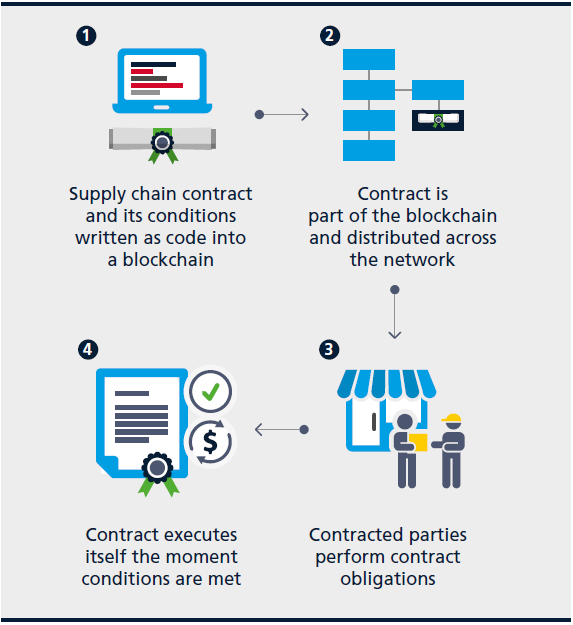
The first definition of smart contracts dates back as far as 1994, when Nick Szabo described his idea, knowing however, that suitable technology to deploy such contracts was lacking: “A smart contract is a computerized transaction protocol that executes the terms of a contract. The general objectives of smart contract design are to satisfy common contractual conditions (such as payment terms, liens, confidentiality, and even enforcement), minimize exceptions both malicious and accidental, and minimize the need for trusted intermediaries. Related economic goals include lowering fraud loss, arbitration and enforcement costs, and other transaction costs.” (Tapscott; Tapscott, 2018, p. 184). With the invention of blockchain technology in 2008, the technology for deploying smart contracts was born. Most blockchain platforms allow execution of scripts on top of a blockchain, which formed the basis for smart contracts to evolve. The key function of smart contracts is the automated execution of a pre-defined underlying legal contract, once certain conditions are met), which are in logistics e.g. receival of goods, payments or similar (see Figure 14).
Thanks to blockchain technology those contracts can be executed without third-party involvement and are therefore faster, more reliable, and cheaper. It can also be connected to IoT systems, to minimize human interaction required during the flow of goods. Smart contracts can be implemented for single and multi-tranche transactions, meaning it is also possible to include sub-contracts for different stages of contract fulfillment (Korpela et al., 2017).
4.3.3 Use Cases of Blockchain in Logistics and Supply Chain
As global supply chains involve a large number of different stakeholders, interests and third-party intermediaries, companies in the industry face a high level of complexity (Chung et al., 2018b). Maersk estimated in 2014 already, that a simple shipment of refrigerated goods from East Africa to Europe involved nearly 30 people and organizations counting 200 different interactions and communications (IBM, 2017). Blockchain supports trustworthy transactions and “sources of truth” in such environments through information technology instead of human control (Zhao et al., 2016). By providing reliable digital records of the flow of digital goods and making it accessible in real-time for all stake holders along the supply chain, blockchain can establish trust and paper records can be replaced by trusted digital records (Kodym et al., 2020). Generally, leaner, automated, and error-free processes resulting from blockchain implementation can significantly contribute to cost saving ambitions (Chung et al., 2018b). Another aspect is that material flow and financial flow in logistics are often not aligned but occur at different points in time, which locks in a lot of working capital, which could be used more effectively. Petersen et al. (2018) identified three main clusters of blockchain applications in the supply chain- and logistics industry: product tracking (material- and information flow), product tracing (information flow) and supply chain finance (material-, information- and financial flow, e.g. through smart contracts).
Product Tracking
Product tracking offers real-time updates on scheduling changes, handling errors or similar ad-hoc information and allows stakeholders such as transportation companies and production planners to adapt to changes in time. Making such data available was already possible before but often failed, however blockchain offers increased trust and better interoperability, which were major issues before. One example is BASF, which invested in a project where smart pallets wrote data gathered by sensors into the blockchain. Sensors would record position and movement, ambient temperature load state, acceleration, and impacts, which made the transportation process a lot more transparent. This means, if a load got damaged, the time of the impact would have been recorded and the handling party at that time could be determined. For perishable goods a potential disruption of the cooling chain implies significant risk, but as the temperature is constantly measured and the data is accessible on the blockchain for parties downstream the supply chain, the risk for the end customer can be reduced (Lacefield, 2017). Another example is the Mojix Retail Solution Suite by Microsoft and Mojix, which offers businesses to create one database for suppliers, retailers, and carriers. Not only does it provide access to data, but also ensure compatibility of data enabling a seamless data flow between the different entities involved. When the companies teamed up, Mojix already had experience in implementing RFID scanning in the textile industry, while Microsoft was able to deliver solutions on the infrastructure and software site accordingly (Petersen et al., 2018). In order to offer a trusted database that can be accessed by different stakeholders along the supply chain, the system was implemented using the Ethereum blockchain. Confidential data will remain private, while certain data can be made public, e.g. to make the origin of products more transparent to customers. The blockchain combined with IoT implementations such as RFID tracking also allows for automated execution of smart contracts along the supply chain, and at the same time provides real time access to extended analytics, as non-digital processes are eliminated (mojix, 2020).
Product Tracing
Product tracing allows authenticity of products and shipments to be determined thanks to blockchain providing an immutable record of information provided by verified data points along the supply chain. An exemplary use case is verifying authenticity of pharmaceutical products in developing countries, where the relationship between pharmacists and wholesalers lacks trust (Petersen et al., 2018). A real-world example is provided by BHP Billiton, storing sampling location and handling records of geological samples on public Ethereum blockchain, instead of using spreadsheets and emails and at the same time allow vendors to access collected data in real-time (Rizzo, 2016). Key advantages include increased empowerment of vendors through data and identification of the latest owner in cases of lost samples (Petersen et al., 2018). But also in food safety, blockchain has the potential to dramatically increase transparency and allow for quickly tracing back origins of contaminated food and mitigate risks and impacts of various kinds (IBM, 2016).
Supply Chain Finance
In supply chain finance, blockchain aims to improve e.g. the working capital situation of companies along the supply chain and make trade finance processes more efficient based on digital technology. In traditional supply chains, many processes are still computer-paper-computer operations, like e.g. issuing a letter of credit in trade finance in order to release a payment. Additionally, these documents are often incompatible with the receiver´s IT systems and require manual inputs, which makes the whole process much slower and therefore less efficient. Same goes for the regular participation of several parties in one transaction. With flexible, blockchain-based smart contracts, these transactions can be automatically executed once pre-defined conditions are met through information provision on the blockchain by the transactional counterparty, which can also be machine-to-machine communication in IoT systems (Korpela et al., 2017). This also means less working capital to be locked in pending transactions waiting to be confirmed by counterparties. In Figure 15 an example for a use case of blockchain technology and smart contracts in trade finance is provided. The seller successfully delivers goods to a buyer, expressed by ω. A number of record keepers automatically submit their reports on the business activities (y) based on IoT sensors to the blockchain protocol, which forms decentralized consensus (z) once the reports are all submitted and coherent. Decentralized consensus (z) on details such as successful delivery and acceptable condition of the product is the pre-defined condition of the smart contract, in order to be executed. Once z is successfully stored in a block, the smart contract is triggered and executes the payment.
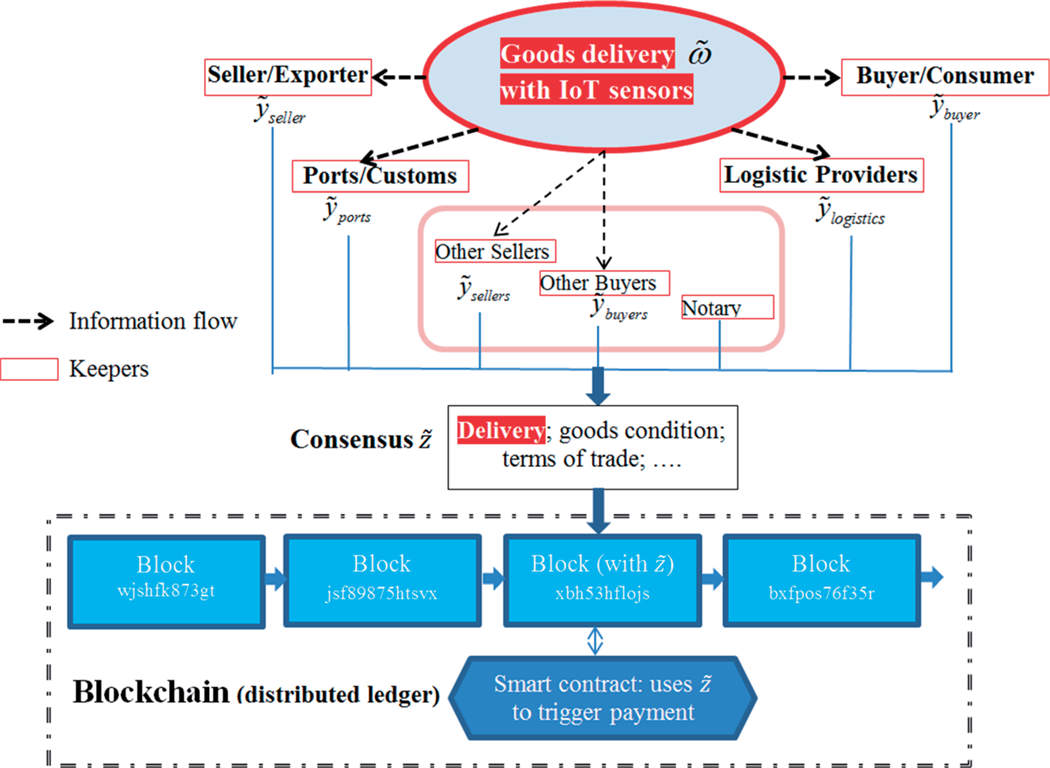
4.3.4 Discussion
Even though the blockchain technology found technological implementation in 2008, use cases of the technology for various industries only began to emerge in recent years. Overall, the technology is still in its infancies. Relevance and the rate of implementation are both still low (Kersten et al., 2017). At the same time, an ongoing hype around the blockchain technology can be observed.
Blockchain technology certainly has numerous promising use cases, in which the technology can be used. As processes become increasingly digitized and supply networks become more globalized, the need for cross-company digitized processes increases as well. At the same time, interfaces no longer are necessarily human-to-machine, but often machine-to-machine due to the growing adoption of IoT infrastructure. Blockchain can be a key technology in order to implement a reliable and compatible digital source of data for cross-company and cross-country activities between multiple parties along the supply chain. It has the potential to digitize paper-based processes, make them less vulnerable to error and fraud, and make them fit for the age of Industry 4.0. But not only can blockchain increase the efficiency at the interface of different stakeholders along the supply chain, it can also increase the level of trust between the parties providing a reliable source of data. This is especially the case, once business operations start to involve a growing number of unknown or untrusted entities. This is often the case even in everyday business operations, such as sending refrigerated goods from East Africa to Europe, as the previous example showed.
Another advantage of blockchain technology is the better traceability of goods for both companies and customers in times of growing demand for sustainability and transparency. Especially in food supply chains, blockchain can have a significant impact on both company and customer side. Tracing back the origin of goods, e.g. in case of contaminated foods, can significantly lower legal risks on the company side. For the customer side demanding sustainability and transparency, parts of the blockchain can easily be made accessible, in order for them to trace back the origin of their product. Therefore, blockchain makes it possible to establish a trust relationship between the company and their customers, allowing the customer to gather information even on early supply chain stages. However, such tracing capabilities are not only relevant for the end customer, but also companies along the supply chain, in order to have reliable real-time tracking information on the goods. In case of delays, they can easily adapt their plans according to the data available in real-time on the blockchain.
Finally, blockchain-enabled smart-contracts have significant potential to transform supply chain finance. Nowadays, just like on the production site, many processes be it customs-related or trade-finance-related are still paper-based and involve third-party intermediaries. At these touching points, blockchain can provide one source of data that can be accessed by several parties and edited depending on the consensus model used. At the same time, it provides increased level of data security, as the hardware and network infrastructure storing the distributed ledger varies from node to node, which makes a concentrated attack less likely. Additionally, the nodes are often geographically distributed, making it more resistant against local natural disasters or political influence, compared to traditional central server architectures.
However, there is still a number of challenges unsolved regarding blockchain technology. As the technology is still in its infancies, some of these problems are likely to be addressed in the near future. A major problem still is high latency of confirmation times in the process of finding consensus. This largely depends on the consensus model used, e.g. PoW consensus is often relatively slow due to its underlying computational challenges to be solved to reach consensus. Which points directly to another drawback of blockchain technology: often high energy consumption resulting from the computing resources used for the consensus mechanism. It is also criticized, that those computing resources are wasted, as a large number of nodes work on a computational challenge, while only one solves the problem and receives a reward in the end (Zhao et al., 2016). Another current challenge is the limitation of scalability of many decentralized networks, especially in the field of digital payments on the blockchain.
Besides technical challenges there is also a number of other barriers of for blockchain technology. In a survey, regulatory uncertainty was rated the most relevant barrier for adoption of blockchain in SC&L, followed by the problem of different parties required to join the system in order for it to work. The lack of technological maturity ranked third, and a lack of acceptance in the industry fourth (Petersen et al., 2018). However, there is a lot of work in progress. In Liechtenstein for example, the government passed a new law in May 2019, providing a first regulatory basis for blockchain technology and its application scenarios including cryptocurrencies and the token economy (Ministry of General Government Affairs and Finance Liechtenstein, 2019).
In the end, blockchain provides a number of relevant business cases and opportunities for the SC&L sector especially in times of Industry 4.0. It has the potential, to implement a decentralized network for transactions and tracing operations. But the current hype around blockchain is pushing many current limitations of the technology into the background. Further development will be required to solve a number of problems, that still exist and prevent blockchain adoption to really pick up speed. Especially on the technical and regulatory side many challenges remain unsolved to date. Once a regulatory framework has been established and blockchain reaches a point of technological maturity, blockchain technology holds great potential for SC&L and beyond.
5 Conclusion
The main contribution of this thesis lies in identifying relevant technological Industry 4.0 trends for SC&L and discuss advantages, disadvantages, and major impacts for the supply chain.
The Fourth Industrial Revolution started in the early days with an increasing connectedness of CPS, following the major goal of creating the Smart Factory. Since then, Industry 4.0 technology has been implemented vertically throughout the manufacturing process, horizontally on the strategic cross-company side and along the whole value chain. Logistics 4.0 describes the implementation of such technology in the field of logistics. Looking at the environment SC&L companies operate in today, a significant development is the rise of e-commerce, which leads to a growing demand and a more customer-centric business environment at the same time. Customers nowadays demand fast deliveries, individualization, and a more sustainable and transparent way of doing business. On the logistics side, companies face increasing staff shortages, rising customer expectations, growing risks and complexity.
Looking at technological developments, this thesis discussed three technological trends in greater detail: Robotics, crowdsourcing and blockchain. Robotics have been on the rise since a while already, e.g. in the automotive industry. As growing demand and staff shortages are hitting the logistics companies, robots have become a competitive option to increase efficiency by automating warehousing and logistics processes. Key advantages include 24/7 availability, greater flexibility to react to demand fluctuations, high transparency, low error rates and overall lower costs. However, major drawbacks are increased demand for qualified personnel from the information technology sector and unsolved social and ethical discussions, especially concerning autonomous vehicles and automated warehouses.
Crowdsourcing is also a suitable solution for tackling the huge staff shortages in the logistics sector, especially for delivery drivers. Multiple companies have evolved offering crowd logistics services already on national or international level. Building on such solutions adds flexibility to SC&L processes, especially when demands fluctuate. At the same time, crowdsourcing poses a significant risk for traditional companies like DHL, as part of their business activities is overtaken by the crowd for significantly lower cost. Time will tell whether traditional market players will adapt to those challenges or even offer similar solutions themselves. In sustainability regards, the increased utilization of resources is certainly helping to reduce the businesses` carbon footprints. The major downside of crowdsourcing is increased uncertainty and inconsistency regarding risk and quality of work.
The third major trend is blockchain technology, even though the view on the topic is often unrealistically optimistic and overhyped. There is no doubt that blockchain will have significant impact on various industries, especially in the finance and SC&L sector. It will provide the technological basis to implement a reliable source of data, or a source of truth, as it is immutable and requires decentralized consensus. Especially in the SC&L sector, where different parties work together nationally and internationally, this holds great potential. It also goes along well with the trend of increasing demands in transparency and sustainability regards, as data around the flow of goods can easily be made publicly accessible. At the same time there are major problems open to be solved, such as the high energy consumption, high latencies in the process of finding consensus and a lacking regulatory framework. Those problems have posed significant barriers for blockchain adoption to date. Therefore, in order for blockchain technology to find widespread adoption, a lot of work is required to be done previously. But once there, blockchain holds great potential for establishing decentralized consensus on critical information and transactions between various stakeholders along the supply chain.
To sum it up, the disruptive environment in SC&L including the trends discussed in this thesis is set to significantly transform the supply chain as we know it. As of today, many processes are still relying on extensive paperwork, which is becoming increasingly inefficient, as general business operations become increasingly digitized. The discussed trends show however, that the (r)evolution of the supply chain has begun and will only pick up speed in the years to come.
Note
“Der Begriff Industrie 4.0 steht für die vierte industrielle Revolution, einer neuen Stufe der Organisation und Steuerung der gesamten Wertschöpfungskette über den Lebenszyklus von Produkten. (…) Durch die Verbindung von Menschen, Objekten und Systemen entstehen dynamische, echtzeitoptimierte und selbst organisierende, unternehmensübergreifende Wertschöpfungsnetzwerke, die sich nach unterschiedlichen Kriterien wie bspw. Kosten, Verfügbarkeit und Ressourcenverbrauch optimieren lassen.“ (Plattform Industrie 4.0, 2015, p. 3). ↑
Abbreviations
- AS/R
- Automated storage and retrieval
- AS/RS
- Automated storage and retrieval system
- AVS/RS
- Autonomous vehicle-based or shuttle-based storage and retrieval system
- BASt
- Federal Highway Research Institute
- CPS
- Cyper Physical Systems
- DLT
- Distributed Ledger Technology
- DPoS
- Delegated Proof of Stake
- ICT
- Information and Communications Technology
- IoS
- Internet of Services
- IoT
- Internet of Things
- LaaS
- Logistics-as-a-Service
- LiDAR
- Light detection and ranging
- LSP
- Logistics Service Provider
- PBFT
- Practical Byzantine Fault Tolerance
- PoS
- Proof of Stake
- PoW
- Proof of Work
- RFID
- Radio-frequency identification
- RFMS
- Robotic Mobile Fulfillment Systems
- ROI
- Return On Investment
- SC&L
- Supply Chain and Logistics
- SHA
- Secure Hash Algorithm
Bibliography
A.T. Kearney, “Consumer Centric: From Idle to Agile. Research Overview”, 2018, available at: https://info.kearney.com/5/2130/uploads/from-idle-to-agile-summary-report.pdf?intIaContactId=5%2beUEj221K5olTGtaM2n8A%3d%3d&intExternalSystemId=1 (accessed 10 June 2020).
Amazon, “Amazon Robotics Drive Unit”, available at: http://media.corporate-ir.net/media_files/IROL/17/176060/Oct18/Amazon%20Robotics%20Drive%20Unit.PNG (accessed 13 July 2020).
Azadeh, K., Koster, M.B.M. de and Roy, D., “Robotized Warehouse Systems: Developments and Research Opportunities”, SSRN Electronic Journal, 2017.
Barreto, L., Amaral, A. and Pereira, T., “Industry 4.0 implications in logistics: an overview”, Procedia Manufacturing, Vol. 13, pp. 1245–1252, 2017.
Bauernhansl, T., Hompel, M. ten and Vogel-Heuser, B., Industrie 4.0 in Produktion, Automatisierung und Logistik, Springer Fachmedien Wiesbaden, Wiesbaden, 2014.
Boston Consulting Group, “Digital Transformation in the Logistics Industry”, 2020, available at: https://www.bcg.com/industries/transportation-travel-tourism/center-digital-transportation/logistics.aspx (accessed 11 June 2020).
Bundesregierung, “Automatisiertes Fahren auf dem Weg”, 2017, available at: https://www.bundesregierung.de/breg-de/aktuelles/automatisiertes-fahren-auf-dem-weg-326108 (accessed 17 June 2020).
Bundesverband E-Commerce und Versandhandel Deutschland e.V. (bevh), “Prozentualer Anteil des Online- und Versandhandels am Einzelhandelsumsatz in Deutschland 2008 bis 2018”, 2019, available at: https://www.handelsdaten.de/e-commerce-und-versandhandel/online-und-versandhandel-umsatzanteil-am-einzelhandel-zeitreihe (accessed 8 June 2020).
Carbone, V., Rouquet, A. and Roussat, C., “The Rise of Crowd Logistics: A New Way to Co-Create Logistics Value”, Journal of Business Logistics, Vol. 38 No. 4, pp. 238–252, 2017.
Chen, Chiang and Storey, “Business Intelligence and Analytics: From Big Data to Big Impact”, MIS Quarterly, Vol. 36 No. 4, p. 1165, 2012, available at: https://www.jstor.org/stable/41703503.
Chung, G., Gesing, B., Chaturvedi, K. and Bodenbenner, D.P., “Logistics Trend Radar. Version 2018/19”, 2018a, available at: https://www.dhl.com/cn-en/home/insights-and-innovation/insights/logistics-trend-radar.html (accessed 15 February 2020).
Chung, G., Gockel, B., Acar, T. and Forster, M., “Blockchain in logistics. Perspectives on the upcoming impact of blockchain technology and use cases for the logistics industry”, 2018b (accessed 10 December 2019).
Cong, L.W. and He, Z., “Blockchain Disruption and Smart Contracts”, The Review of Financial Studies, Vol. 32 No. 5, pp. 1754–1797, 2019.
Davies, A., “Uber's Self-Driving Truck Makes Its First Delivery: 50,000 Beers”, 2016, available at: https://www.wired.com/2016/10/ubers-self-driving-truck-makes-first-delivery-50000-beers/.
Deliv, 2020, available at: https://www.deliv.co/ (accessed 21 June 2020).
Deloitte, “Mitigating compliance risk. Implications for global supply chains”, 2015, available at: https://www2.deloitte.com/content/dam/Deloitte/us/Documents/consumer-business/us-cp-supply-chain-risk-compliance.pdf (accessed 9 June 2020).
Deutsche Post DHL Group, “myDHLi - Simply Connected”, Fact Sheet, 2020a, available at: https://www.dpdhl.com/content/dam/dpdhl/de/media-center/media-relations/documents/2020/factsheet-dgf-mydhli-de.pdf (accessed 9 June 2020).
Deutsche Post DHL Group, “myDHLi Responsive Design”, 2020b, available at: https://www.dpdhl.com/content/dam/dpdhl/en/media-center/media-relations/images/2020/mydhli-portal-responsive-design.jpg.
Fraunhofer IML, “RackRacer. Vielseitiges und flexibles Bediengerät für Behälterlager”, available at: https://www.iml.fraunhofer.de/de/abteilungen/b1/maschinen_und_anlagen/entwicklungen/rackracer.html.
Gasser, T.M., “Rechtsfolgen zunehmender Fahrzeugautomatisierung. Gemeinsamer Schlussbericht der Projektgruppe; Bericht zum Forschungsprojekt F 1100.5409013.01”, 2012, available at: http://bast.opus.hbz-nrw.de/volltexte/2012/587/.
Gomoll, W., “Wenn China hustet, kränkelt das Auto-Geschäft der ganzen Welt. Folgen des Coronavirus”, WirtschaftsWoche online, 09.03.2020, available at: https://archiv.handelsblatt.com/document/WWON__WW%2025623628 (accessed 10 June 2020).
Hadwick, A., “Supply Chain Hot Trends 2019”, 2019, available at: https://eloqua.eft.com/LP=23503 (accessed 8 June 2020).
Hawksworth, J., Kupelian, B., Berriman, R. and Mckellar, D., “UK economic outlook”, 2017, available at: https://www.pwc.co.uk/economic-services/ukeo/pwc-uk-economic-outlook-full-report-march-2017-v2.pdf (accessed 19 June 2020).
Hermann, M., Pentek, T. and Otto, B., “Design Principles for Industrie 4.0 Scenarios: A Literature Review”, 2015, available at: http://www.snom.mb.tu-dortmund.de/cms/de/forschung/Arbeitsberichte/Design-Principles-for-Industrie-4_0-Scenarios.pdf (accessed http://www.snom.mb.tu-dortmund.de/cms/de/forschung/Arbeitsberichte/Design-Principles-for-Industrie-4_0-Scenarios.pdf).
Hoberg, K., Petersen, M. and Heinen, J., “Die Implikationen digitaler Technologien für die Supply Chain 4.0”, in Obermaier, R. (Ed.), Handbuch Industrie 4.0 und Digitale Transformation: Betriebswirtschaftliche, technische und rechtliche Herausforderungen, pp. 165–187, 2019.
Hofer, J., “Wenn das Regal Räder bekommt”, Handelsblatt, 14.07.2017, pp. 24–25, available at: https://archiv.handelsblatt.com/document/HB__CF30E8A2-E452-403C-8A4B-6460CCB914E1%7CHBPM__CF30E8A2-E452-403C-8A4B-6460CCB914E1 (accessed 24 April 2020).
Höll, A., “Effiziente Automobilproduktion mit RFID-Technologie”, 2018, available at: https://www.sick.com/de/de/effiziente-automobilproduktion-mit-rfid-technologie/w/blog-automotive-production-rfid-audi-sick/ (accessed 5 June 2020).
IBM, “IBM leveraging blockchain to test food supply chain traceability”, 2016, available at: https://www-03.ibm.com/press/us/en/photo/50817.wss (accessed 11 July 2020).
IBM, “Maersk and IBM Unveil First Industry-Wide Cross-Border Supply Chain Solution on Blockchain”, 2017, available at: https://www-03.ibm.com/press/us/en/pressrelease/51712.wss (accessed 11 July 2020).
Jazdi, N., “Cyber physical systems in the context of Industry 4.0”, in 2014 IEEE International Conference on Automation, Quality and Testing, Robotics, Cluj-Napoca, Romania, IEEE, pp. 1–4, 2014.
Kagermann, H. Prof. Dr., acatech - Deutsche Akademie der Technikwissenschaften e. V., Wahlster, W. Prof. Dr., Deutsches Forschungszentrum für Künstliche Intelligenz GmbH, Helbig, J. Dr. and Deutsche Post AG, “Umsetzungsempfehlungen für das ZukunftsprojektIndustrie 4.0. Abschlussbericht des Arbeitskreises Industrie 4.0”, Deutschlands Zukunft als Produktionsstandort sichern, 2013a, available at: https://www.bmbf.de/files/Umsetzungsempfehlungen_Industrie4_0.pdf (accessed 20 May 2020).
Kagermann, H. Prof. Dr., acatech -National Academy of Science and Engineering, Wahlster, W. Prof. Dr., German Research Center for Artificial Intelligence, Helbig, J. Dr. and Deutsche Post AG, “Recommendations for implementing the strategic initiative INDUSTRIE 4.0. Final report of the Industrie 4.0 Working Group”, Securing the future of German manufacturing industry, 2013b, available at: https://en.acatech.de/wp-content/uploads/sites/6/2018/03/Final_report__Industrie_4.0_accessible.pdf (accessed 5 June 2020).
Kersten, W., Seiter, M., See, B. von, Hackius, N. and Maurer, T., “Trends and Strategies in Logistics and Supply Chain Management - Digital Transformation Opportunities”, 2017, available at: https://www.bvl.de/misc/filePush.php?id=39660&name=BVL2017-TAS-Digital-Transformation-Study.pdf (accessed 7 June 2020).
Kiss, M., Digital skills in the EU labour market: In-depth analysis, In-depth analysis, European Parliament, [Brussels], 2017.
Kodym, O., Kubáč, L. and Kavka, L., “Risks associated with Logistics 4.0 and their minimization using Blockchain”, Open Engineering, Vol. 10 No. 1, pp. 74–85, 2020.
Korpela, K., Hallikas, J. and Dahlberg, T., “Digital Supply Chain Transformation toward Blockchain Integration”, in Proceedings of the 50th Hawaii International Conference on System Sciences (2017), Hawaii International Conference on System Sciences, 2017.
Lacefield, S., “Pilot project connects blockchain and "smart" pallets”, 2017, available at: https://www.supplychainquarterly.com/articles/print/1450-pilot-project-connects-blockchain-and-smart-pallets (accessed 11 July 2020).
Linich, D., “The path to supply chain transparency. A practical guide to defining, understanding and building supply chain transparency in a global economy”, 2014.
Marle, G. van, “Truck driver shortage crisis now spreading across the whole of Europe”, 2018, available at: https://theloadstar.com/truck-driver-shortage-crisis-now-spreading-across-whole-europe/ (accessed 8 June 2020).
Mehmann, J., Frehe, V. and Teuteberg, F., “Crowd Logistics - A Literature Review and Maturity Model”, in Kersten, W., Blecker, T. and Ringle, C.M. (Eds.), Innovations and strategies for logistics and supply chains: Technologies, business models and risk management, Proceedings of the Hamburg International Conference of Logistics (HICL), 2nd, corrected ed., epubli GmbH, Berlin, pp. 118–145, 2015.
Ministry of General Government Affairs and Finance Liechtenstein, “Blockchain. Bericht und Antrag zum «Blockchain-Gesetz» verabschiedet”, 2019, available at: https://www.regierung.li/blockchain (accessed 12 July 2020).
mojix, “A new wave of digital transformation. Solve retail challenges by turning real-time item level data into high-value actionable business intelligence”, 2020, available at: https://query.prod.cms.rt.microsoft.com/cms/api/am/binary/RE36yw7 (accessed 11 July 2020).
Nakamoto, S., “Bitcoin: A Peer-to-Peer Electronic Cash System”, 2008, available at: https://bitcoin.org/bitcoin.pdf.
Obermaier, R., Industrie 4.0 als unternehmerische Gestaltungsaufgabe, Springer Fachmedien Wiesbaden, Wiesbaden, 2016.
Petersen, M., Hackius, N. and See, B. von, “Mapping the sea of opportunities: Blockchain in supply chain and logistics”, it - Information Technology, Vol. 60 No. 5-6, pp. 263–271, 2018.
Plattform Industrie 4.0, “Industrie 4.0 - Whitepaper FuE-Themen”, 2015, available at: https://www.din.de/blob/67744/de1c706b159a6f1baceb95a6677ba497/whitepaper-fue-themen-data.pdf (accessed 27 May 2020).
Randler, S., “Verbraucher als Paketboten: Das lehrt ein DHL-Projekt”, 2015, available at: https://neuhandeln.de/verbraucher-als-paketboten-das-lehrt-ein-dhl-projekt/ (accessed 20 June 2020).
Reimann, S., “2020 werden Schiffe ferngesteuert”, DVZ Deutsche Verkehrs Zeitung, 2017, available at: https://www.dvz.de/rubriken/see/detail/news/2020-werden-schiffe-ferngesteuert.html.
Rizzo, P., “World´s largest mining company to use blockchain for supply chain”, Coindesk, 2016, available at: https://www.coindesk.com/bhp-billiton-blockchain-mining-company-supply-chain (accessed 11 July 2020).
Roland Berger, “Of Robots and Men - in logistics. Towards a confident vision of logistics in 2025”, 2016, available at: https://www.rolandberger.com/publications/publication_pdf/of_robots_and_men___in_logistics.pdf (accessed 17 June 2020).
Sasso, M., “There Aren’t Enough Drivers to Keep Up With Your Delivery Lifestyle”, 2018, available at: https://www.bloomberg.com/news/articles/2018-06-13/amazon-grubhub-boom-fuels-cold-dinner-woes-and-hunt-for-drivers?sref=9VGzcMAX (accessed 22 June 2020).
Schor, J., “Debating the Sharing Economy”, 2014, available at: https://greattransition.org/publication/debating-the-sharing-economy (accessed 7 May 2020).
Shevchenko, A., “Proof-of-Stake Vs. Proof-of-Work: Which One Is ‘Fairer’?”, Cointelegraph, 2020, available at: https://cointelegraph.com/news/proof-of-stake-vs-proof-of-work-which-one-is-fairer (accessed 13 July 2020).
Sixfold, “Covid impact on logistics — share of idling trucks almost triples”, 2020, available at: https://sixfold.com/news/covid-impact-on-logistics-share-of-idling-trucks-almost-triples (accessed 10 June 2020).
Tapscott, D. and Tapscott, A., Blockchain revolution: How the technology behind Bitcoin and other cryptocurrencies is changing the world, Portfolio/Penguin, New York, NY, 2018.
Uber, “Uber Announces Results for Fourth Quarter and Full Year 2019”, 2020, available at: https://www.businesswire.com/news/home/20200206005857/en/ (accessed 20 June 2020).
Uckelmann, D., “A Definition Approach to Smart Logistics”, in Balandin, S., Moltchanov, D. and Koucheryavy, Y. (Eds.), Next Generation Teletraffic and Wired/Wireless Advanced Networking, Springer Berlin Heidelberg, Berlin, Heidelberg, pp. 273–284, 2008.
Vanderlande, “ADAPTO. Warehousing | Storage (AS/RS)”, available at: https://www.vanderlande.com/warehousing/innovative-systems/storage-asrs/adapto/.
Waymo, “Our Journey”, 2020, available at: https://waymo.com/journey/ (accessed 17 June 2020).
Xu, L.D., He, W. and Li, S., “Internet of Things in Industries: A Survey”, IEEE Transactions on Industrial Informatics, Vol. 10 No. 4, pp. 2233–2243, 2014.
Yaga, D., Mell, P., Roby, N. and Scarfone, K., Blockchain technology overview, Gaithersburg, MD, 2018.
Zhao, J.L., Fan, S. and Yan, J., “Overview of business innovations and research opportunities in blockchain and introduction to the special issue”, Financial Innovation, Vol. 2 No. 1, 2016.
Zheng, Z., Xie, S., Dai, H.N., Chen, X. and Wang, H., “Blockchain challenges and opportunities: a survey”, International Journal of Web and Grid Services, Vol. 14 No. 4, p. 352, 2018.
Zhou, K., Liu, T. and Zhou, L., “Industry 4.0: Towards future industrial opportunities and challenges”, in 2015 12th International Conference on Fuzzy Systems and Knowledge Discovery (FSKD), Zhangjiajie, China, IEEE, pp. 2147–2152, 2015.
Zusammenfassung
THE ORIGINAL GERMAN SUMMARY, AS SUBMITTED
Nachdem bereits drei industrielle Revolutionen die Wertschöpfungsketten maßgeblich transformiert haben, steht bei der vierten industriellen Revolution aktuell die intelligente Vernetzung von Menschen, Objekten und Systemen im Vordergrund, einhergehend mit einem hohen Grad an Automatisierung. Die Arbeit beleuchtet die Auswirkungen von aktuellen Trends der Industrie 4.0 im Hinblick auf den Logistik- und Supply Chain Sektor, wobei in diesem Zusammenhang auch von Logistik 4.0 gesprochen wird. Dabei wird deutlich, dass die Supply Chain in großem Maße von der Industrie 4.0 profitieren kann. Insbesondere hoher Kostendruck, ein starker Trend zur Individualisierung und ein sich verschärfender Fachkräftemangel setzen den Sektor zunehmend unter Druck. Neben allgemeinen Entwicklungen werden in dieser Arbeit drei technologische Trends ausführlich beleuchtet: Robotik- und autonome Fahrzeuge, Crowdsourcing und Blockchain. In Zeiten von zunehmender Digitalisierung und einer rasant steigenden Nachfrage durch wachsenden E-Commerce, bieten Roboter zahlreiche Chancen, manuelle Prozesse beispielsweise in Warenhäusern umfassend zu automatisieren. Hinzu kommen steigende Lohnkosten, während die Kosten für den Einsatz von Robotern kontinuierlich sinken. Roboter sind darüber hinaus zeitunabhängig und in ihrer Anzahl flexibel einsetzbar. Ähnliche Vorteile bieten sich beim Einsatz autonomer Fahrzeuge, welche sich in der Regel aber im Gegensatz zu Robotern im öffentlichen Raum bewegen, beispielsweise autonome LKW. Durch die zunehmende Digitalisierung und Verfügbarkeit von mobilen Endgeräten hat außerdem das Crowdsourcing als zweiter wichtiger Trend an Bedeutung gewonnen. Zahlreiche Crowd Logistics Anbieter erlauben dem Kunden die flexible Buchung von Logistikdienstleistungen, welche anschließend von einer beliebigen Person aus der Crowd erbracht werden. Hier wird das Geschäftsmodell traditioneller Logistikdienstleister klar infrage gestellt. Zusätzlich kann Crowdsourcing insbesondere durch den effizienteren Ressourceneinsatz deutliche Kostenersparnisse bringen. Einen dritten relevanten Trend stellt die Blockchain Technologie dar. Sie stellt in Zeiten zunehmender Globalisierung der Wertschöpfungskette eine zuverlässige, unveränderbare Datenquelle für die zahlreichen Teilnehmer der Supply Chain bereit, und kann so einen Beitrag leisten, Vertrauen aufzubauen wo es vorher fehlte. Ob Robotik, Crowdsourcing, oder Blockchain - diese drei Trends verdeutlichen bereits eindrucksvoll die hohe Dynamik der Logistik 4.0, welche die Supply Chain in naher Zukunft maßgeblich verändern wird.